Art designed around nautical constraints
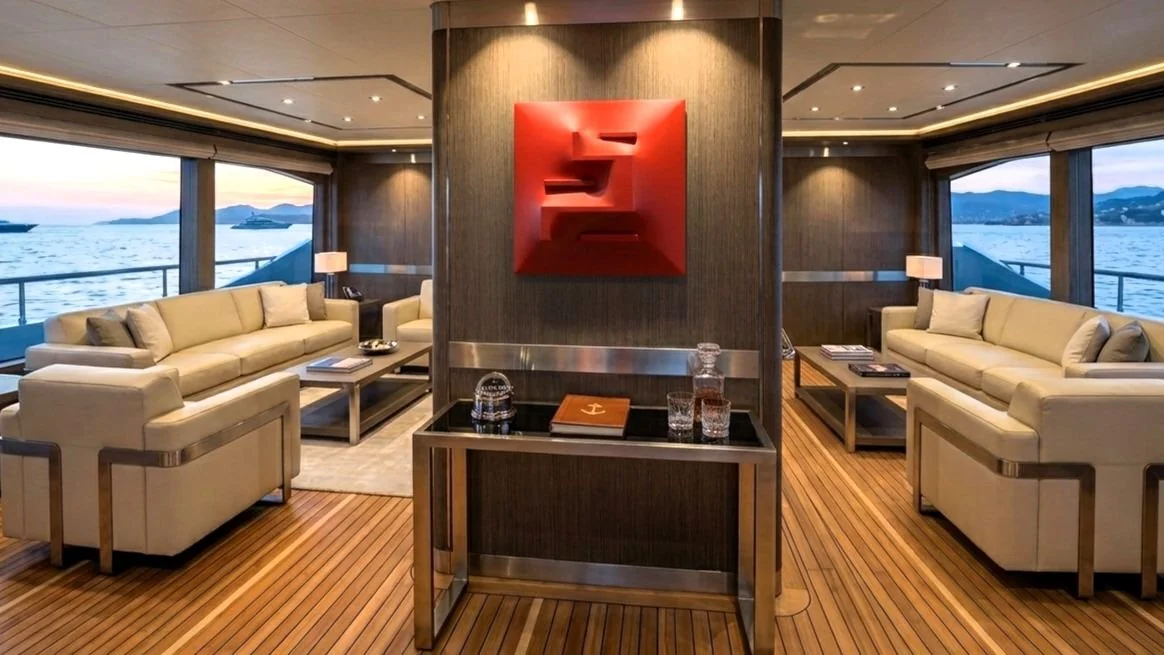
A yacht interior demands precision. Weight, vibration, humidity, fixing systems, restricted access and carefully controlled lighting all influence the artwork. A bespoke wall relief can respond to these constraints while preserving a strong sculptural identity.
Compact depth and modular construction make extroflessed works suitable for corridors, lounges, owner suites and stair halls where a freestanding sculpture may not be practical.
Light as part of the composition
On board, light changes throughout the day and from anchorage to night navigation. Relief transforms those changes into moving shadow. In selected works, integrated LED becomes a structural component rather than decorative illumination.
The palette can connect with stone, timber, metal and textile finishes without merely matching them. The result should retain artistic autonomy while belonging naturally to the vessel.
Collaboration with the project team
The Studio works with yacht designers, shipyards, art consultants and technical teams from concept through installation. Early coordination allows fixing points, power and maintenance access to disappear into the interior architecture.
Frequently asked questions
What should be considered when specifying art for a superyacht interior?
Weight, vibration, humidity, fixing systems, access, maintenance and lighting should be discussed early with the yacht designer, shipyard and technical team. The artwork must be evaluated for the specific vessel and installation context.
Can wall sculpture work in a yacht interior?
A wall relief can be considered where floor space is limited and where its depth, weight, fixing and maintenance requirements are compatible with the interior architecture. Suitability is assessed project by project.
Explore Projects, Works, Contact the Studio.
Discuss a commission