
The room that was not a room
In 1949 a visitor who climbed to the Galleria del Naviglio in Milan found no paintings on the walls. The room was dark. Shapes hung from the ceiling, painted in colours that seemed to belong to no pigment, and under ultraviolet light they glowed as if the air itself had learned to hold them. Lucio Fontana called the work Ambiente spaziale a luce nera. It stayed open for six days.
What he asked of the visitor was unusual. Not to look at a picture, but to stand inside a question: whether art, after a war, after radio and the first television sets, could go on pretending that space was a window painted on a flat surface. Spatialism is his answer, and it took him twenty years to give it.
This page follows that answer from its roots in Futurist sculpture to the cuts, the neon, the white labyrinth of Kassel and the generation that pushed the canvas outward. It ends in the Studio's own room in Trabia, where the question is still open.
Rosario, Milan, Brera: a sculptor before the manifesto
Lucio Fontana was born on 19 February 1899 in Rosario de Santa Fe, in Argentina, to a father who was an Italian sculptor. The family moved to Italy in 1905 and the boy grew up between two countries. In 1922 he went back to Argentina and worked in his father's studio, a trade of monuments and carved stone.
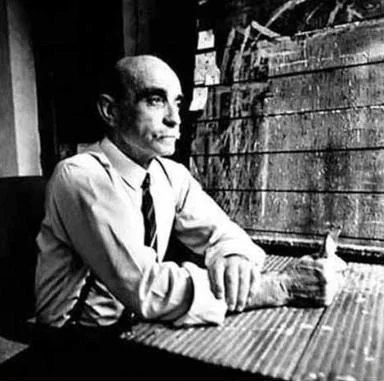
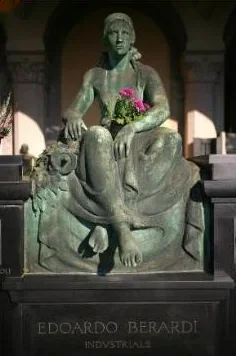
In 1927 he returned to Milan and enrolled at the Brera Academy, where he studied under Adolfo Wildt, a sculptor of solemn, almost metallic form, and graduated at the end of 1929. He soon turned away from that language. His first solo exhibition was held in 1931 at the Galleria del Milione, and through the decade he worked in abstraction and in ceramics. In 1930 he also made the monument for the industrialist Edoardo Berardi, which still stands in the Cimitero Monumentale of Milan: a sculptor's work in the old sense, stone, figure and mourning.
It is worth holding on to this beginning. Fontana's idea of space did not start in a manifesto. It started in the hands of a man who understood volume, who had spent his youth in front of closed surfaces, and who came to distrust them.
Boccioni's long shadow
Spatialism reads like a late reply to Futurism. On 11 April 1912 Umberto Boccioni published the Technical Manifesto of Futurist Sculpture and asked that sculpture stop closing the body inside its contour and let the surrounding air enter the form. A year later he modelled Unique Forms of Continuity in Space, a striding figure whose body is worn and lengthened by the air it moves through.
Thirty-five years on, Fontana asks the same thing of the surface. Boccioni opens the body into the environment. Fontana opens the picture into the room. The step from one to the other crosses two wars, the rise and the collapse of a regime that had borrowed Futurist rhetoric, and a rejection of everything bombastic in the old avant-garde. What survives is the intuition: an artwork is not an object placed in space but a way of making space happen.
The history page of this site traces that line from Futurism and Duchamp to Minimalism. Here it is enough to say that Fontana never denied his debt. The first Spatialist manifestos borrow the Futurists' gestures of announcement, and drop their noise.
Buenos Aires, 1946: the White Manifesto
During the Second World War Fontana went back to Argentina. In Buenos Aires he taught, and with his students he founded the Altamira Academy. In 1946 the academy issued the Manifiesto Blanco, the first text in which the ideas of Spatialism appear. Fontana did not sign it, but it was written around him and carries his thinking.
The White Manifesto argues that art must free itself from its old dependence on matter. It asks for a new art in which matter, colour and sound move together, and in which the work takes in the dimensions that science had opened. It is a text of its moment, written in the language of the avant-garde, and it contains in outline everything Fontana would do in Milan.
There is something moving in its timing. It was written far from Europe, in a city that had received so many Italian exiles, while the old continent was counting its ruins. A new art was being imagined from the other side of the ocean, as a form of faith in what could still be built.
Milan, 1947 to 1952: manifestos, a gallery and a television set
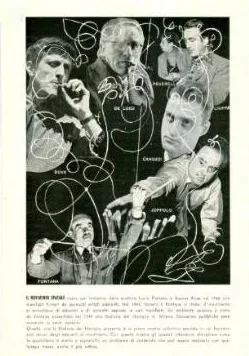
Back in Milan in 1947, Fontana gathered writers, critics, architects and artists. The First Manifesto of Spatialism was published in December 1947 and signed by Fontana, Beniamino Joppolo, Giorgio Kaisserlian and Milena Milani. A second text followed in 1948. Between 1947 and 1952 the movement issued five manifestos, among them a technical manifesto in 1951 and a manifesto for television in 1952.
The television manifesto is the best key to the whole movement. It was distributed during a broadcast on Italian television and signed by a large group that included Fontana, Roberto Crippa, Gianni Dova, Alberto Burri, Beniamino Joppolo and Milena Milani. Its argument is that television is a medium the Spatialists had been waiting for, because it carries a work through space instead of fixing it to an object. A group of painters, a writer and a critic stood before a camera and asked what an image is when it can travel.
The movement had a home. Carlo Cardazzo's Galleria del Naviglio in Milan hosted its exhibitions and its debates. Seen from today, the manifestos say more about the questions than about the answers: they are firm in what they reject and loose in what they propose. The answers are in the works.
Black light and a line of neon
The first answer came in 1949 with the Ambiente spaziale a luce nera. It is the first of Fontana's spatial environments and is regularly cited as a pioneering work of what would later be called installation art. A reconstruction was shown at Pirelli HangarBicocca in Milan in 2017.
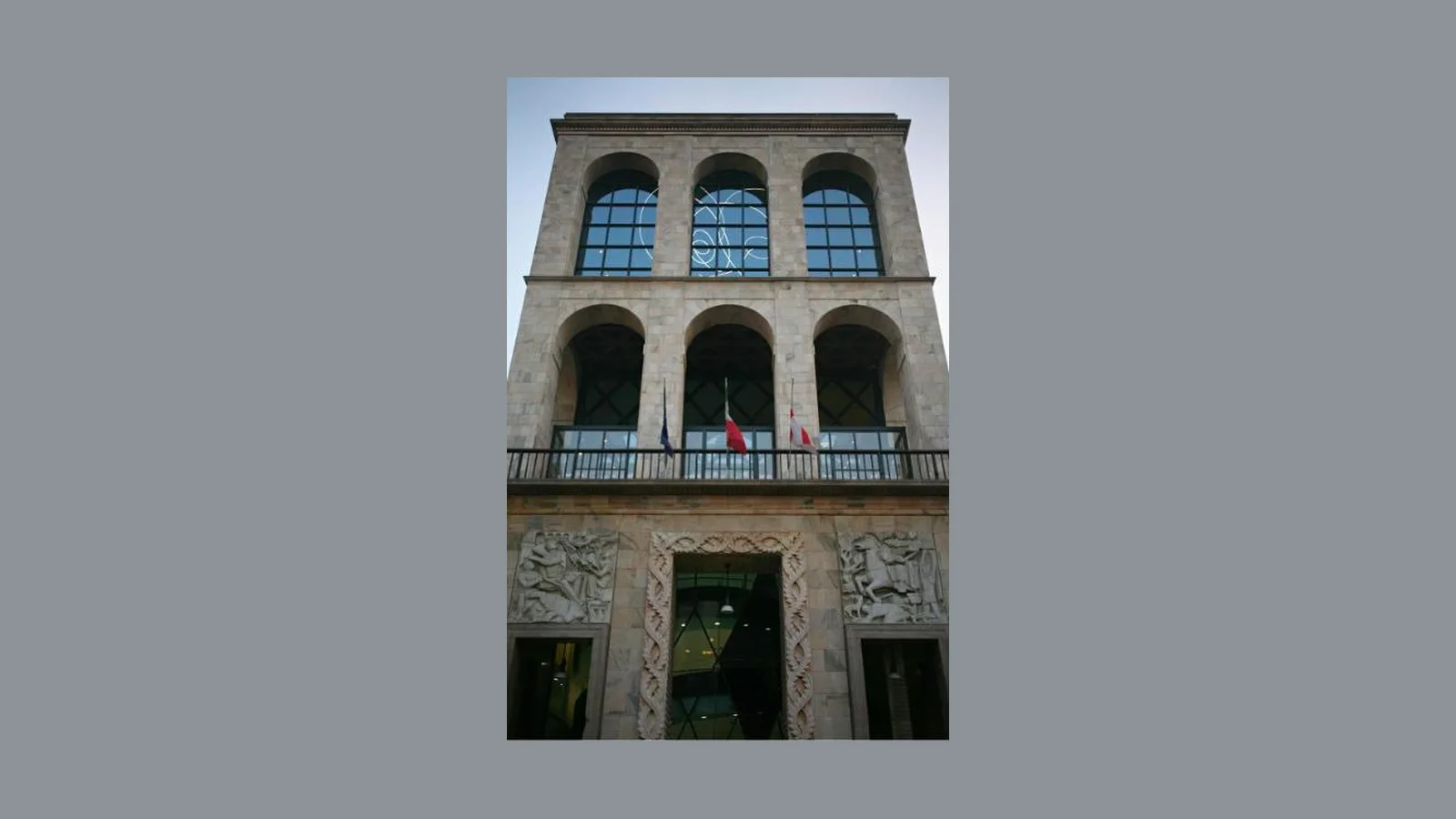
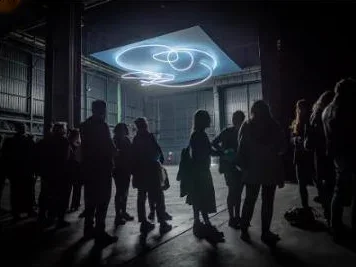
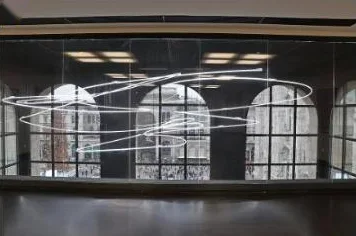
The second came in 1951 with the Struttura al neon per la IX Triennale di Milano, a long line of neon suspended above the grand staircase of the Triennale's Palazzo dell'Arte. The work met architecture head on: a drawing made not on paper but in the volume of a building, by a material that had until then belonged to shop signs. It was reconstructed in 2010 and is now in the Museo del Novecento in Milan.
It is no accident that the same Triennale was the shop window of Italian design. The city that produced the neon was producing, in the same years, the lamps, chairs and typewriters that the Modernariato page of this site follows. Art and the object of use shared a studio-table culture, the same patrons and often the same architects.
The cut
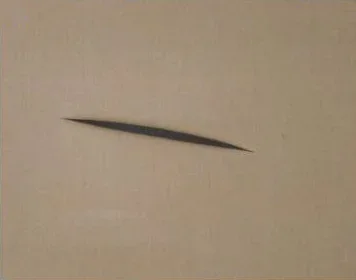
Fontana pierced a canvas for the first time in 1949, with an awl. The holes formed groups and vortices, and they broke the flat surface so that the space behind the picture became part of it. In late 1958 the gesture shortened and sharpened into the tagli, the cuts: a single slash with a blade across a monochrome canvas, often backed with black gauze so that the opening gave onto dark depth. The works are titled Concetto spaziale and often carry the subtitle Attesa or Attese, one cut or several.
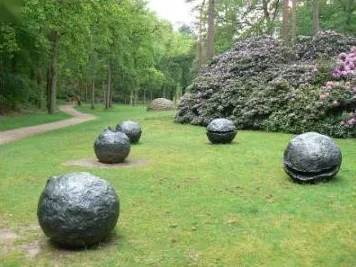
The gesture is brief and the result is not decorative. A single act, a surface that is no longer closed. In 1958 he had a solo room at the Venice Biennale, and in 1966 he won its Grand Prize for painting. The Natura series of 1959 and 1960 carried the cut into sculpture: spheres of terracotta, several later cast in bronze, opened and tunnelled from the outside, so that the surface became a mass and the cut showed that there is an inside.
The late series enlarge the vocabulary without leaving it. La fine di Dio (1963 to 1964) is made of thirty-eight large ovals in vivid colours, pierced with cuts and holes, shown for the first time in Milan in 1963 with a text by Gillo Dorfles. In a later interview Fontana connected the title to the impossibility of a traditional representation of the divine. The Teatrini (1964 to 1966) are shaped frames before a coloured ground, like small stages. In 1968, at Documenta 4 in Kassel, he built an entirely white labyrinth with a large plaster cut at its centre. He died that September at Comabbio, near Varese.
What these works share
Three ideas run through the whole sequence. The first is the surface as a threshold. In Fontana's work the canvas is not a window onto an illusion and not an object admired for its paint. It is a skin that can be opened, and what appears when it opens is real space.
The second is light as a material. Neon, ultraviolet light and the dark depth behind a cut are not effects added to the work. They are part of how it is built. The third is the relation to the viewer and to the room. The environments make this explicit, and the cuts achieve it with the smallest means: the viewer is placed before an opening and is asked to supply the rest.
These ideas are the reason the movement has lasted. They can be taken up without copying a single gesture, and they have been.
Dova, Peverelli and Milani: the Milan circle
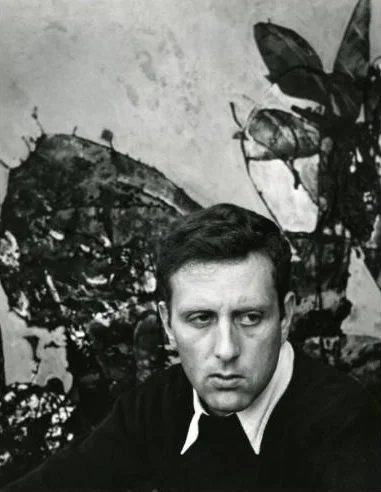
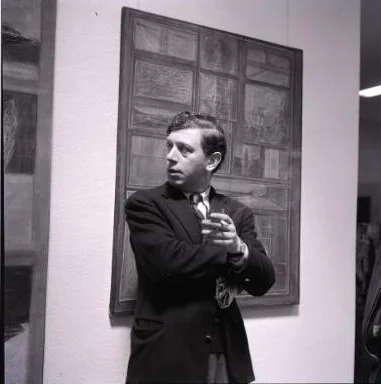
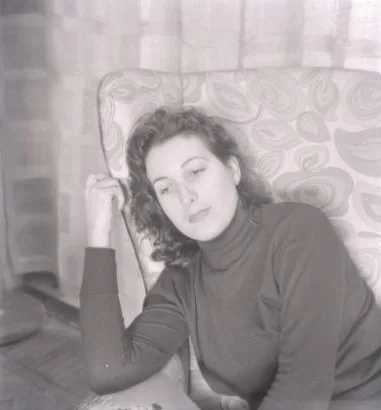
Around Fontana a group formed in Milan between 1947 and 1952. Gianni Dova (1925 to 1991) was one of its painters and signed the Spatialist manifestos. Cesare Peverelli (Milan 1922 to Paris 2000) joined the circle as a young painter and later worked largely in Paris. Milena Milani (Savona 1917 to Rome 2013) was a writer and critic who signed the early manifestos with Fontana, Joppolo and Kaisserlian.
The group matters for what it was not. Spatialism never imposed a style. The paintings of Dova and Peverelli and the works of Fontana share a programme, an art that takes up the technologies and the sense of space of its time, and yet they look different on the wall. That openness is why the name could pass to later artists who never signed anything.
For a reader today the circle shows how Italian art worked after the war: small groups gathered around a gallery, a magazine and a manifesto, with a writer or a critic in each. It was a culture of conversation before it was a market.
Burri's wound, Fontana's cut
Roberto Crippa (Monza 1921 to Bresso 1972) is, with Dova, the painter most often named beside Fontana. In 1952 the television manifesto carried the names of Crippa, Alberto Burri and Tancredi Parmeggiani, known as Tancredi. Burri (Città di Castello 1915 to Nice 1995) and Tancredi (Feltre 1927 to Rome 1964) soon went their own ways, and that such different artists signed the same sheet shows how freely the idea of space could be read.
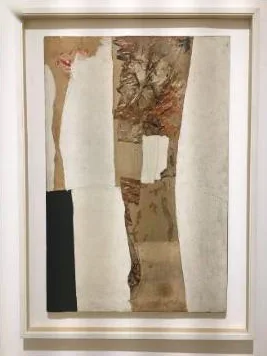
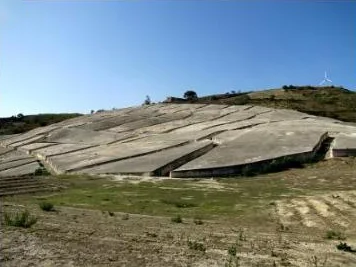
Burri is the most instructive companion. Fontana's cut is a clean opening: a blade, a single movement, a threshold. Burri worked the surface as flesh. He stitched sacking, burned plastic, and later let kaolin and vinyl dry until they cracked in the Cretti. In the mid-1980s, after the earthquake of 1968 had destroyed the old town of Gibellina in Sicily, he began to cover its ruins with white cement, a field of fractures at the scale of a landscape. Fontana opens, Burri heals and scars. Both treat the surface as a body that can be wounded and both refuse the picture that merely decorates a room.
For anyone who lives and works in Sicily the comparison is not abstract. The Cretto of Gibellina is a few hours from the Studio, and it remains one of the places where the Italian twentieth century says most about the surface of things.
Echoes abroad: Zero, Klein and the artists of light
The reach of Spatialism beyond Italy is a matter historians discuss with care, and this page does not claim a line of descent where the sources do not. What can be said is that the questions travelled. In 1959 Piero Manzoni and Enrico Castellani founded the Galleria Azimut and the journal Azimuth in Milan, a short venture that ran until 1960 and brought Italian work into contact with the German group Zero and with Yves Klein.
Klein's blue monochromes, the Zero group's reliefs and lights, the fluorescent tubes that Dan Flavin began to show in the 1960s, the carved and filled voids of later sculptors: all of these share with Fontana the idea of the work as a situation, of light as a substance, of the viewer as part of the piece. Some of the links are direct, some are parallel. Together they show that Fontana had named in the late 1940s a problem that the whole second half of the century would keep returning to.
From the cut to extroflexion
The Milan of Azimut is where the line becomes concrete. Fontana was a point of reference for the whole group. From there the painted surface became an object. Castellani and Agostino Bonalumi developed shaped, extroflexed canvases, modelled from behind with nails, frames and structures, and Gillo Dorfles called the result pittura-oggetto, painting-object. Fontana opens the canvas, and they push it toward the viewer.
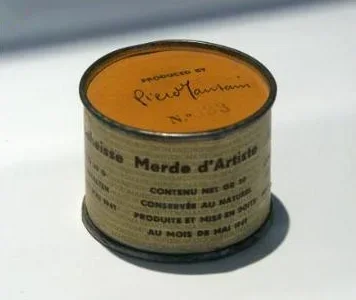
Piero Manzoni, in the same circle, took the question of the work and of the artist's own body to its limit. In 1961 he sealed ninety small tins of Merda d'artista and priced them by weight. It is a joke with a hard core: what do we buy when we buy art, and who guarantees it?
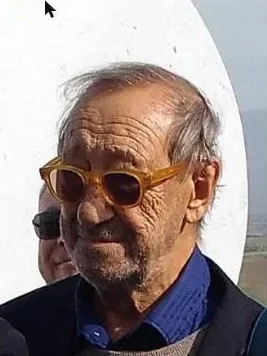
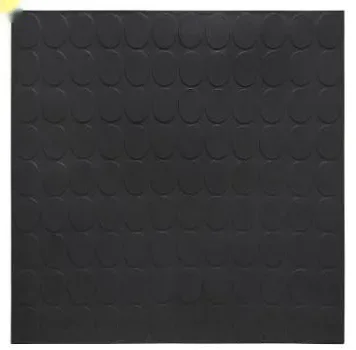
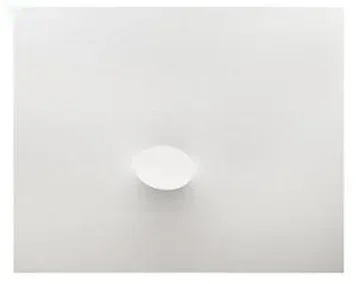
The names most often cited for the extroflexed line are Enrico Castellani (1930 to 2017), Agostino Bonalumi (1935 to 2013) and Turi Simeti (Alcamo, Sicily, 1929 to Milan 2021), who worked in Milan from the early 1960s with the raised oval as his recurring form. A Sicilian in Milan, he made the oval into a kind of signature: a modest module repeated until the wall begins to breathe.
In the Studio's research
The Studio, founded in 2014 and based in Trabia, Sicily, works in this line. The pieces are extroflessed and modular: each module can be moved to obtain different light effects and can be made in other colours. In the LED works light is not shone on the piece from outside but is part of it.
Surface as a threshold, light as a material, space as part of the work: these are the questions the Studio takes from Spatialism. The works are original pieces and are made by hand. They can be seen on the Works page and in the Extroflessed art collection.
Key terms
Concetto spaziale (Spatial Concept): the generic title Fontana gave to works with holes and cuts. The work is an idea of space, not a depiction of it.
Buco (hole): a perforation of the canvas, from 1949. Taglio (cut): a slash made with a blade, from 1958. Attesa, Attese (waiting, expectations): the subtitle of many cuts, one cut or several.
Ambiente spaziale (spatial environment): a room conceived as a work, with light as its main material.
Estroflessione (extroflexion): the surface pushed outward from behind, creating relief. It is the step taken after Fontana by Castellani and Bonalumi, and it is the term the Studio uses for its own work.
Pittura-oggetto (painting-object): the formula used by Gillo Dorfles for painting that becomes an object.
Where to see Fontana's work
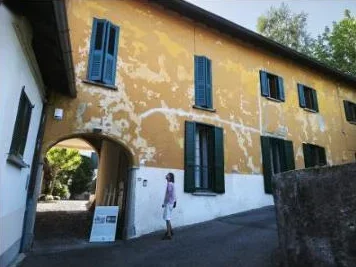
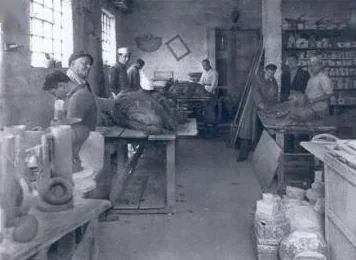
The Neon Structure for the 9th Triennale is at the Museo del Novecento in Milan. Tate holds Spatial Concept 'Waiting' (1960). The Fondazione Lucio Fontana in Milan keeps the archive and the catalogue. In Albisola, on the Ligurian coast, he worked in ceramic at the Mazzotti workshop, and at Comabbio, near Varese, the house where he spent his last years is a place of memory. Until 19 December 2026 the exhibition Lucio Fontana: Spatialism. Pioneering the Contemporary is open at Hauser & Wirth in Hong Kong, and the Exhibitions page of this site follows current shows in Italy and abroad.
The photographs on this page are published under free licences, with the author credited and a link to the source. The artworks and designs they show remain the property of their authors, heirs and the museums that hold them.
Frequently asked questions
Who founded Spatialism?
Lucio Fontana, in Milan in 1947, with writers, critics and artists. Its ideas were anticipated in the 1946 Manifiesto Blanco in Buenos Aires.
What does Concetto spaziale mean?
It is the generic title Fontana gave to works with holes and cuts: the work as an idea of space, not as a depiction.
What is the difference between Spatialism and extroflexion?
Fontana opens the canvas with holes and cuts. Extroflexion pushes it outward from behind, creating relief, and was developed in Milan by Castellani and Bonalumi.
Why did Fontana cut the canvas?
To treat the surface as a threshold. The cut opens the picture onto real space and removes the illusion of depth painted on a flat plane.
How many Spatialist manifestos are there?
The Manifiesto Blanco of 1946 in Buenos Aires, then five manifestos issued in Italy between 1947 and 1952, including a technical manifesto and a manifesto for television.
Is contemporary extroflessed art connected to Spatialism?
Yes. It continues the Spatialist questions about surface, light and space through relief, modular construction and, in some works, integrated light.
Part of the series From canvas to space. Related collections: Extroflessed art and wall reliefs, Extroflessed art.
Discuss a commission