
Scope
There is a moment in the twentieth century when a painting stops being a picture of something and becomes something in the room. It happens more than once, in different cities, for different reasons, and no single artist owns it. This page follows that thread in chronological order, from Cubist Paris and Futurist Milan to Minimalism and the mirrored voids of the present, and it sets Italy, France and the rest of Europe beside New York period by period: what was happening in Milan or Rome while Paris, Düsseldorf or New York were doing something else. Lucio Fontana and Italian Spatialism stand at its centre. It does not pretend to be a complete history of contemporary art. It is a path, and each step on it names the works, dates and texts that mark it, checked against museum and scholarly sources.
Photographs on this page carry free licences, with the author credited and a link to the source. The works and designs they show remain the property of their authors and of the institutions that hold them.
1907 to 1914: Cubism in Paris, Futurism in Milan, abstraction in Munich
Paris came first. Between 1907 and the outbreak of war in 1914 Pablo Picasso and Georges Braque worked in close company and broke the single viewpoint of painting. Picasso's Les Demoiselles d'Avignon dates from 1907, and Braque answered it, and Cézanne, with the landscapes that a critic described as made of little cubes. In May 1912 Picasso glued a piece of imitation chair-caning onto a still life, the first Cubist collage, and from then on the picture could contain real things. A second Cubism, shown in a room of the Salon des Indépendants in 1911, came from Jean Metzinger, Albert Gleizes, Fernand Léger and Robert Delaunay, whose Orphism built pictures from colour alone.
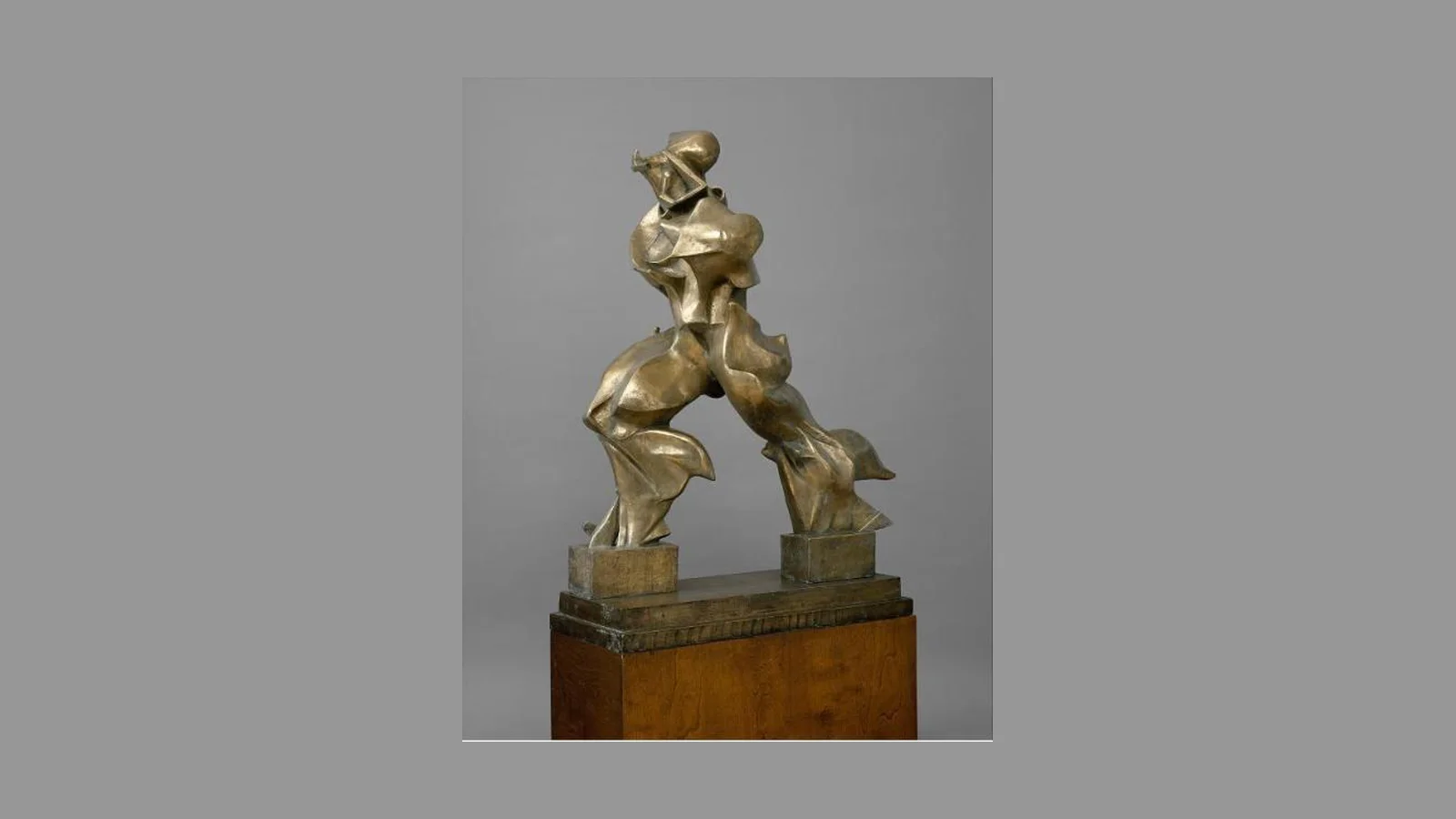
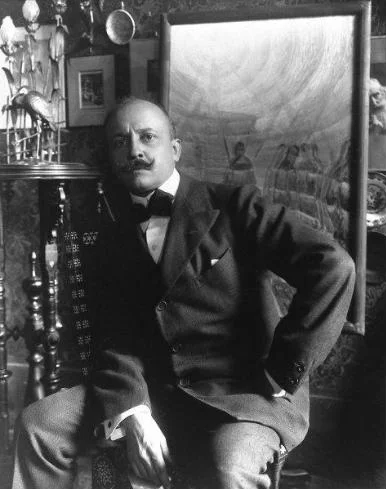
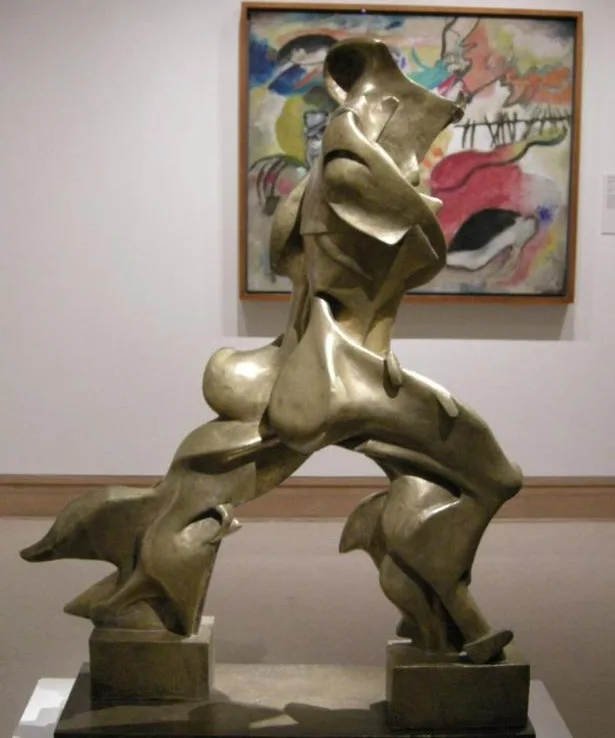
Milan answered with a shout. On 20 February 1909 Filippo Tommaso Marinetti published the founding manifesto of Futurism on the front page of Le Figaro in Paris, and declared that a roaring motor car was more beautiful than a statue. The movement's sculptor, Umberto Boccioni, took the provocation seriously. In his Technical Manifesto of Futurist Sculpture of 11 April 1912 he rejected the closed contour of the statue and the marble pedestal, asked that sculpture take in the surrounding environment, and proposed materials that no academy had approved: glass, wood, cardboard, iron, cement, horsehair, leather, cloth, mirrors and electric light.
A year later he modelled Unique Forms of Continuity in Space, a striding figure whose body is eroded and extended by the air it moves through. Boccioni died in 1916, thrown from a horse in military training, and the bronzes that exist today were cast after his death, so the museum casts are posthumous editions of the 1913 plaster. What matters for the story is the idea: a work no longer ends at its outline.
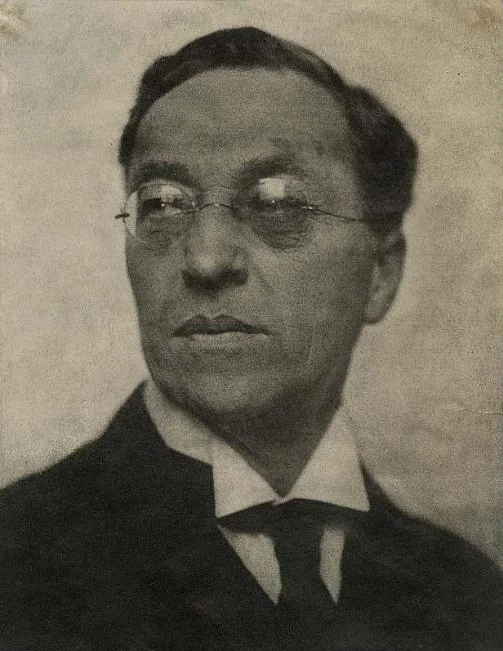
In Munich, in the same years, Wassily Kandinsky painted his first non-figurative works, and his Composition VII of 1913 is the best-known result. Painting was learning to do without the world, and the picture surface was becoming a field with its own laws.
1913 to 1923: Duchamp, Malevich, Mondrian and the Metaphysical
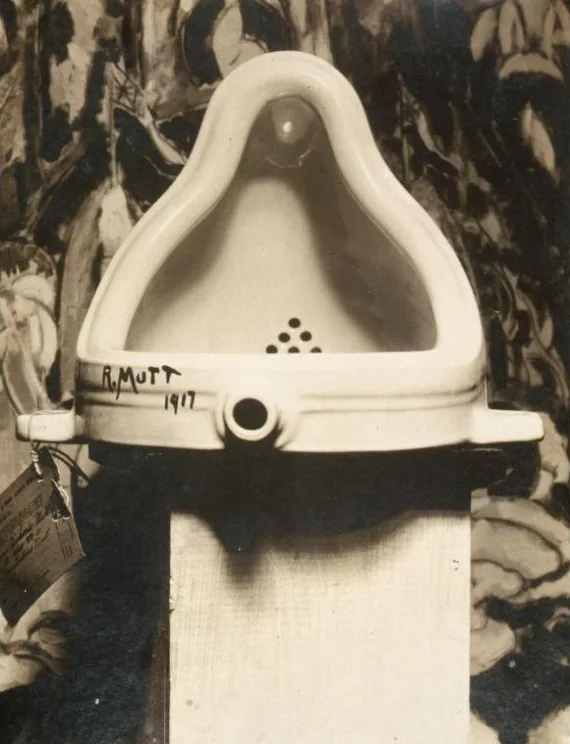
While the Futurists made noise, Marcel Duchamp took the opposite course and made silence. He had come out of Paris Cubism: in 1912 his Nude Descending a Staircase was withdrawn from the Salon des Indépendants after objections from Cubists on the hanging committee, and in 1913 it made his name at the Armory Show in New York. That year he fixed a bicycle wheel to a kitchen stool. In 1914 he chose a bottle rack, and in 1917 he submitted a porcelain urinal, signed R. Mutt and titled Fountain, to the exhibition of the Society of Independent Artists in New York. The show was meant to accept any work from a paying member, and Fountain was nevertheless not exhibited. The original was lost, and what survives is the photograph Alfred Stieglitz made at his gallery, together with later replicas authorised by Duchamp.
The readymade moves the value of a work from the hand to the decision: the artist chooses, names and places an object. Duchamp described his own position as opposed to what he called retinal art, painting made to please the eye. From 1915 to 1923 he worked on The Large Glass, a construction on glass panels that he left unfinished, in which diagrams, lead wire and dust replace brushwork. Every later artist who has set an object in a room and called it a work owes him the permission.
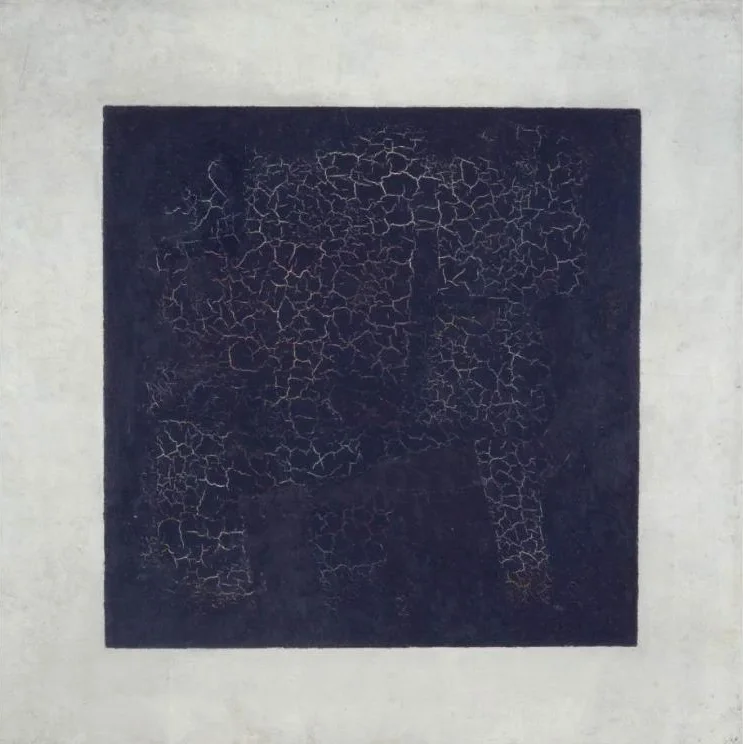
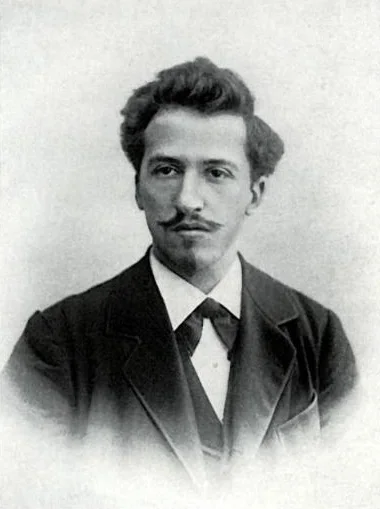
Elsewhere painting went the other way, toward purity. Kazimir Malevich showed Black Square at the exhibition 0.10 in Petrograd in December 1915, hung high across a corner of the room in the place where a Russian household would put an icon. He called the new language Suprematism and treated the square as the zero of painting. Piet Mondrian, who had lived in Paris from 1912 and returned there in 1919, joined the De Stijl group in 1917 and reduced the picture to horizontal and vertical black lines and the three primary colours with white, a method he named Neo-Plasticism. The next question is what that field physically is, and who may open it.
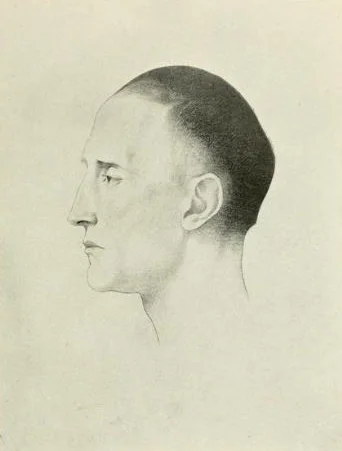
Italy had its own silences in these years. Giorgio de Chirico (Volos 1888 to Rome 1978) painted the empty piazzas, long shadows and arcades of Metaphysical Painting from 1910, and in Ferrara in 1917 he and Carlo Carrà gave the style its name, pittura metafisica. The pictures use perspective not to describe a place but to produce a charged emptiness, and the Surrealists later claimed him as a precursor.
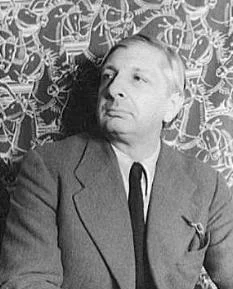
1919 to 1945: Surrealist Paris, the Bauhaus and Morandi's still lifes
In Paris the next movement came from literature. André Breton published the first Surrealist Manifesto in 1924, and painters including Max Ernst, Joan Miró, René Magritte and Salvador Dalí made dream and chance into a method. Duchamp's readymade and de Chirico's empty piazzas were both claimed as ancestors. In Germany the Bauhaus, founded by Walter Gropius in Weimar in 1919, taught painting, sculpture and design as one discipline, and Kandinsky taught there from 1922.
Giorgio Morandi (Bologna 1890 to 1964) took the opposite course. For decades he painted still lifes of bottles, jugs and boxes in his studio in Bologna, in muted tones and with almost no change of subject. He taught etching at the Bologna academy from 1930 and won the main painting prize at the Venice Biennale in 1948. His quiet pictures matter for what follows because they show how little a painting needs: a few forms, set in a space, can carry the whole work.
In Milan, Lucio Fontana was in these decades still a sculptor, trained under Adolfo Wildt and working in stone and ceramics. His path to Spatialism is told on the page dedicated to him on this site.
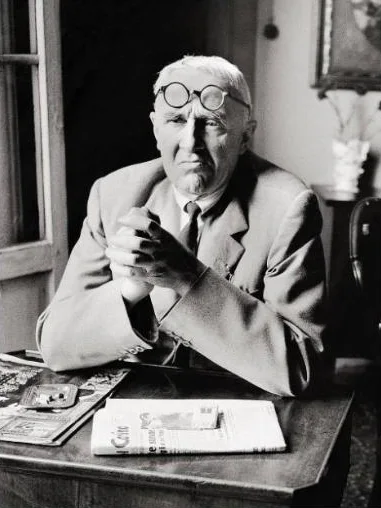
1945 to 1952: Paris, Rome and Venice after the war
The war ended and every capital began to paint again. In Paris the exhibition Otages by Jean Fautrier at the Galerie René Drouin, in the autumn of 1945, showed small thick paintings of heads and bodies built from layers of paste, and its catalogue was prefaced by André Malraux. The same gallery gave Jean Dubuffet his first solo show in October 1944, and from 1945 Dubuffet began to look for what he called art brut, raw art made outside the schools; in 1948 he took part in founding the Compagnie de l'art brut. In the same year, 1948, Christian Dotremont, Asger Jorn and Constant founded CoBrA in Paris, a group named from Copenhagen, Brussels and Amsterdam that wanted to move the centre of gravity away from Paris itself.
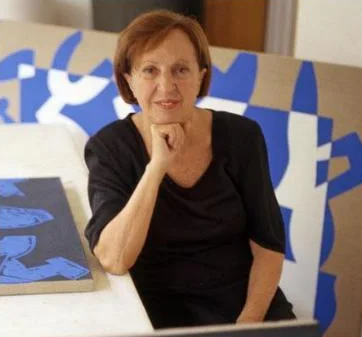
The years after the war were a time of manifestos. In Rome in 1947 Carla Accardi (Trapani 1924 to Rome 2014) signed the Forma 1 manifesto with Pietro Consagra, Piero Dorazio, Ugo Attardi and others, who declared themselves both formalists and Marxists. Accardi worked with bright, flat signs, and from 1965 she used sicofoil, a transparent plastic sheet, as her support, so that the wall shows through the work. Giuseppe Capogrossi (Rome 1900 to 1972) changed course in 1949 and 1950, when he gave up figurative painting for a single sign, a comb-like trident, repeated in endless positions, sizes and colours. In 1951 he founded the Gruppo Origine in Rome with Alberto Burri, Mario Ballocco and Ettore Colla.
Burri (Città di Castello 1915 to Nice 1995) is the necessary counterpart to Fontana. At the start of the 1950s he began the Sacchi, works built from stitched and patched sacking. From 1957 he made the burnt plastics, and from 1973 the Cretti, surfaces cracked like dry earth. In the mid-1980s he began the Grande Cretto at Gibellina in Sicily, a field of white concrete laid over the ruins of the old town destroyed by the Belice earthquake of 1968, completed in 2015. The wound that Fontana made with a blade is made here of burnt plastic, cloth and concrete, and each time the picture is an object in space.
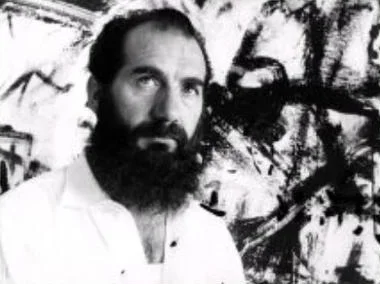
Emilio Vedova (Venice 1919 to 2006) belonged to the Fronte Nuovo delle Arti of 1946 and to the Gruppo degli Otto, presented by the critic Lionello Venturi at the Venice Biennale of 1952. From 1961 he made the Plurimi, painted wooden panels hinged so that they move in the room, painting as a body that occupies space.
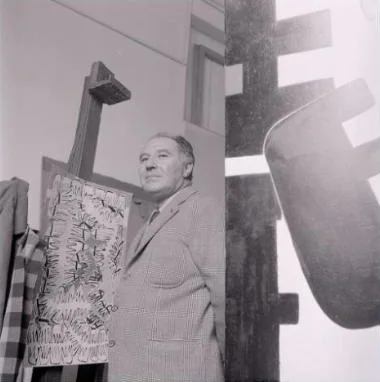
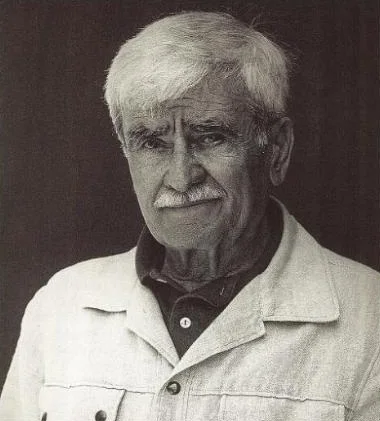
Spatialism: Fontana, 1946 to 1968
In Milan, still counting its ruins, Lucio Fontana wrote a programme. He had written the Manifiesto Blanco with his students in Buenos Aires in 1946, and the First Manifesto of Spatialism followed in Milan in 1947. Between 1947 and 1952 the movement issued five manifestos. They call for an art that uses the technologies of its time, among them neon light and television, and that moves beyond the limits of painting and sculpture. It is Boccioni's old demand, spoken now in the language of the post-war city.
Fontana's works give the programme a physical form. In 1949 he pierced canvases with holes, the Buchi, and presented a Spatial Environment in Black Light at the Galleria del Naviglio in Milan. In 1951 he hung a neon structure for the Milan Triennale. From the end of 1958 he slashed monochrome canvases with a blade, the Tagli, and from 1959 he made the Attese, the cut canvases titled Waiting. The surface becomes a threshold, and what is behind it is real space. The full account has its own page on this site, with the works and the people around them.
New York, 1945 to 1964: Pollock, Rothko, Newman, Frankenthaler, Rauschenberg
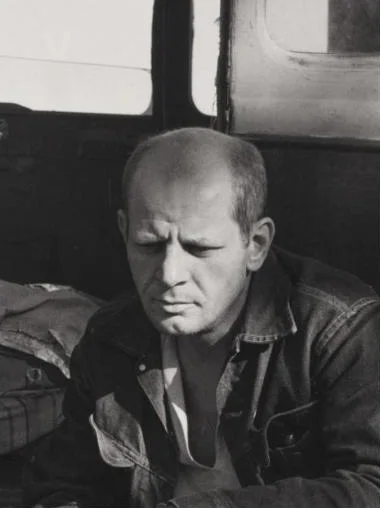
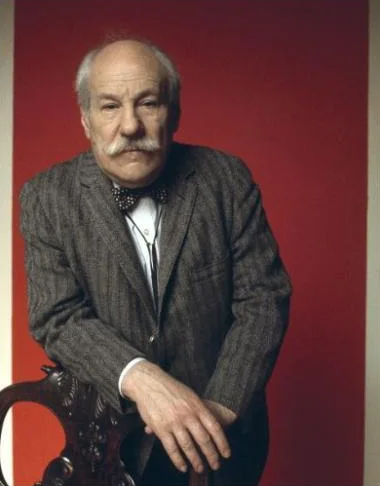
Across the Atlantic the centre of gravity was moving to New York. In November 1945 Jackson Pollock moved to Springs, on Long Island, and from 1947 he poured and dripped paint onto canvases laid on the floor of his barn studio. Number 1A, 1948 is one of the works from this period. In December 1952 the critic Harold Rosenberg described the new painting as an arena in which to act, and the label action painting stuck. The canvas records the movements that produced it.
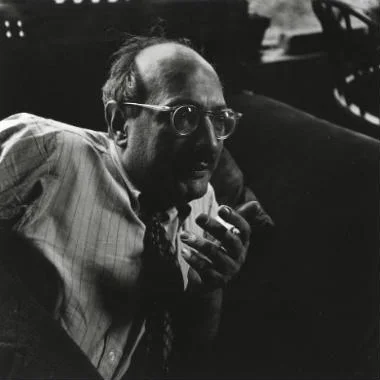
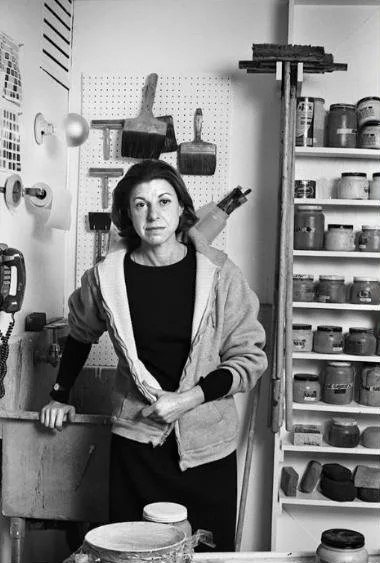
Alongside the gesture came the field. From about 1949 Mark Rothko painted stacked, soft-edged rectangles of colour that float on the canvas, and he asked viewers to stand close to them. Barnett Newman's Onement I of 1948 divides a red-brown field with a single vertical band, which he called a zip, and in Vir Heroicus Sublimis of 1950 and 1951 he used the same device on the scale of a wall. In 1952 Helen Frankenthaler poured thinned oil paint onto unprimed canvas in Mountains and Sea, so that colour and surface became one thing. In 1964 the critic Clement Greenberg grouped related painters under the name post-painterly abstraction. What these artists share is that colour is no longer applied to a surface but fills it, and the field begins to behave like a space.
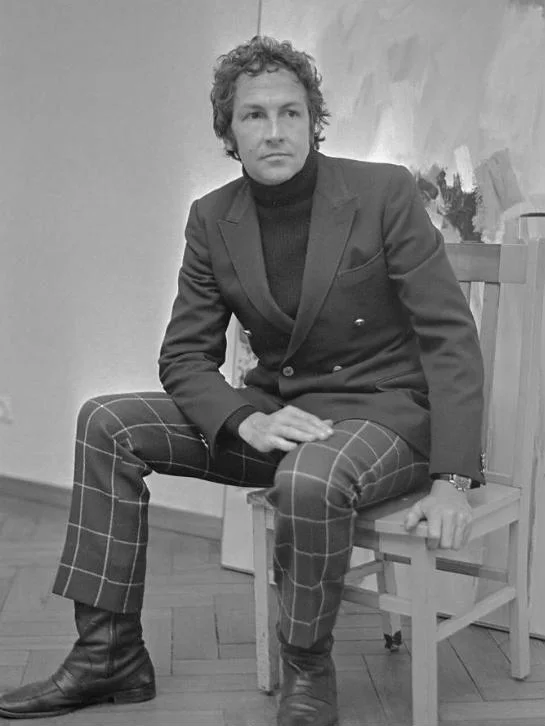
Robert Rauschenberg erased a drawing by Willem de Kooning in 1953, with the older artist's consent, and from 1953 to 1964 he made the combines, which join painted surfaces to found objects. In Bed of 1955 a real quilt and pillow are mounted on a support and painted over. With the combines the picture becomes a three-dimensional object in the room, and Rauschenberg himself placed it between painting and sculpture.
1957 to 1962: Milan, Paris and Düsseldorf, from Azimut to Klein
In 1957 Heinz Mack and Otto Piene began the ZERO group in Düsseldorf, with Günther Uecker joining in 1961, and made light, vibration and the monochrome surface their subject. In Paris, Yves Klein had settled in the mid-1950s, and in January 1957 he showed eleven identical blue canvases at the Galleria Apollinaire in Milan, painted in the ultramarine that became International Klein Blue and whose formula he deposited with the French industrial-property office in 1960. In April 1958 he emptied the Galerie Iris Clert and presented the empty room as a work, titled The Void. Klein died on 6 June 1962, aged thirty-four.
Milan was a meeting point for all of this. In December 1959 Enrico Castellani and Piero Manzoni opened the Galleria Azimut and launched the journal Azimuth, which linked Milan to the German ZERO group and to artists in Paris and New York. Castellani built shallow relief into monochrome canvases by stretching them over rows of nails behind the surface, so that light and shadow draw the form. Agostino Bonalumi pushed the canvas outward with shaped frames and hidden structures, and the critic Gillo Dorfles called the result pittura-oggetto, painting as object.
Turi Simeti (Alcamo 1929 to Milan 2021), who worked in Milan from the early 1960s, developed the raised oval as his recurring form. The line from Fontana to these artists runs in one direction: Fontana opens the canvas from the front, and they push it forward from behind. It is the tradition the Studio's extroflessed works belong to.
1960 to 1967: Nouveau Réalisme, Pop and the Roman school
In May 1960 the critic Pierre Restany used the name nouveau réalisme for a group of artists showing at the Galleria Apollinaire in Milan, and on 27 October 1960 nine of them signed the group's declaration in Yves Klein's home in Paris: Klein, Arman, Martial Raysse, Restany, Daniel Spoerri, Jean Tinguely, François Dufrêne, Raymond Hains and Jacques de la Villeglé. They were joined in 1961 by César, Mimmo Rotella, Niki de Saint Phalle and Gérard Deschamps. Their material was the city: Arman's accumulations, César's compressed cars, the torn posters of Hains and Villeglé, Tinguely's self-destroying machines. The group dissolved in 1970.
In July 1962 Andy Warhol showed thirty-two canvases of Campbell's soup cans at the Ferus Gallery in Los Angeles, one for each variety then on sale. In 1964 he exhibited stacks of Brillo Box sculptures in New York, plywood boxes silkscreened to look like supermarket cartons. The artist's hand gives way to the production line, and the work asks where the line between an object and the picture of an object lies, a question Duchamp had asked fifty years earlier.
The 1960s were loud. In Rome, around Piazza del Popolo, a group later called the Scuola di Piazza del Popolo grew up in the early years of the decade, with Mario Schifano (Homs, Libya, 1934 to Rome 1998), Tano Festa and Franco Angeli among its names. Schifano began with monochrome panels and went on to paint over logos and fragments of images taken from advertising and the street. Angeli set images of power, such as the eagle and the wolf, behind a veil of gauze. Together they carried Pop and the imagery of the mass media into Italian painting.
1963 to 1970: Minimalism, Arte Povera, BMPT and Supports/Surfaces
On 25 May 1963 Dan Flavin mounted an eight-foot fluorescent tube on the wall of his studio at a 45-degree angle. It was the first of the works he made from commercial lighting tubes, and he dedicated it to the sculptor Constantin Brancusi. His installations treat light as the material of sculpture and the architecture of the room as its frame.
In 1965 Donald Judd published the essay Specific Objects, arguing that much of the best new work was neither painting nor sculpture. His boxes and stacks, made of metal and plywood in industrial finishes, occupy the room as plain objects. Fontana had used neon at the Triennale twelve years before Flavin's first tube. The relation between Europe and the United States is one of dialogue and close dates, and it is a mistake to tell it as a one-way story.
In Milan, Arnaldo Pomodoro (1926 to 2025) made polished bronze spheres, the Sfere, split open to show gears and crystalline forms inside. The surface becomes a skin that breaks to reveal an interior, an idea close to Fontana's. The best-known versions stand in the Cortile della Pigna at the Vatican Museums, at the United Nations in New York and at Trinity College Dublin.
In 1967 the critic Germano Celant gave the name Arte Povera, poor art, to a group working in Turin, Genoa and Rome with humble materials and live situations. Michelangelo Pistoletto (born in Biella in 1933) has made mirror paintings since 1962, in which a photographic figure on polished steel brings the viewer's reflection into the picture, and in 1967 he made the Venus of the Rags. Jannis Kounellis (Piraeus 1936 to Rome 2017) filled the Galleria L'Attico in Rome with twelve live horses in January 1969. Giuseppe Penone (born in Garessio in 1947) cast his hand in iron around a young tree in 1968 and let the tree grow around it, so that the work records time. Mario Merz built his igloos from 1968.
In Paris the answer was drier. In 1966 Daniel Buren, Olivier Mosset, Michel Parmentier and Niele Toroni formed BMPT, each repeating a single motif, stripes, circles or brush marks, and staging a series of public manifestations in 1966 and 1967. Buren kept to stripes of one fixed width, 8.7 centimetres, and carried them onto architecture. In September 1970 the exhibition support-surface at the ARC of the Musée d'Art moderne de la Ville de Paris, with Claude Viallat, Daniel Dezeuze and others, took the stretcher, the canvas and the wall as the subjects of painting.
1965 to 1982: Beuys and the expanded work
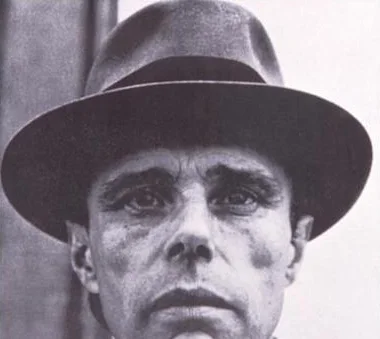
In Germany Joseph Beuys widened the field in another direction. In 1965, at the Galerie Schmela in Düsseldorf, he spent hours with his face covered in honey and gold leaf explaining pictures to a dead hare. In May 1974 he spent three days in a New York gallery with a wild coyote in the action I Like America and America Likes Me. From 1982 he planted 7000 oaks in Kassel, each paired with a basalt stone, as part of what he called social sculpture, the idea that shaping society is itself an art.
Beuys does not belong to Spatialism, but he belongs to the same history. The artwork stops being a painting that hangs on a wall and becomes a situation, with a place, a time and a viewer.
In Paris, Pierre Soulages (Rodez 1919 to Nîmes 2022) began in 1979 the series he called Outrenoir, beyond black: canvases covered entirely in black paint worked into relief, so that the painting is made of the light that the surface catches.
Today
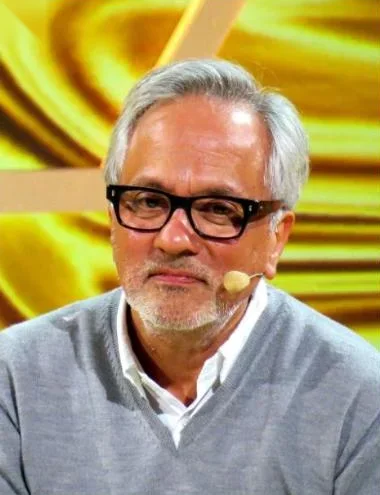
Two artists show how open the question remains. Anish Kapoor, born in Bombay in 1954 and based in London, makes voids of pigment and mirror-polished steel: Descent into Limbo, a black pit that reads as a flat disc, was shown at Documenta IX in 1992, and Cloud Gate in Chicago was completed in 2006. Gerhard Richter, born in Dresden in 1932, has painted abstract works since the 1970s and, in later years, drags layers of colour across the canvas with a large squeegee, so that the surface records both the building and the removal of paint.
The questions of this history remain practical ones for anyone choosing a work for a room: how a surface is built, how light falls on it, how it relates to the wall and the architecture. Alessandro Butera Studio, founded in 2014 and based in Trabia, near Palermo, works in the line of Italian Spatialism. Its works are extroflessed and modular, and in the LED pieces light is part of the work.
Timeline
1907 to 1914. Paris: Les Demoiselles d'Avignon, 1907; Cubism of Picasso and Braque; Salon Cubists, 1911; first Cubist collage, May 1912. Milan: Futurist manifesto, 20 February 1909; Technical Manifesto of Futurist Sculpture, 11 April 1912; Unique Forms of Continuity in Space, 1913. Munich: Kandinsky, Composition VII, 1913.
1913 to 1923. New York and Paris: Duchamp's Bicycle Wheel, 1913; Fountain, 1917; The Large Glass, 1915 to 1923. Petrograd: Malevich's Black Square, December 1915. De Stijl, 1917. Ferrara: Metaphysical Painting named, 1917.
1919 to 1945. Weimar: Bauhaus founded, 1919. Paris: Surrealist Manifesto, 1924. Bologna: Morandi teaches etching at the academy from 1930.
1945 to 1952. Paris: Fautrier's Otages, 1945; Dubuffet's art brut; CoBrA, 1948. Rome: Forma 1, 1947; Gruppo Origine, 1951. Venice: Gruppo degli Otto, 1952. Milan: Manifiesto Blanco, 1946; First Manifesto of Spatialism, 1947.
1945 to 1964. New York: Pollock in Springs from 1945; Newman's Onement I, 1948; Rosenberg's essay, December 1952; Frankenthaler's Mountains and Sea, 1952; Rauschenberg's Erased de Kooning Drawing, 1953, Bed, 1955, combines until 1964.
1946 to 1959. Milan: Holes and Black Light Environment, 1949; neon structure at the Triennale, 1951; cuts from 1958; Galleria Azimut, December 1959.
1957 to 1962. Düsseldorf: ZERO, 1957. Paris: Klein's The Void, April 1958; death of Klein, 6 June 1962.
1960 to 1970. Paris: Nouveau Réalisme declaration, 27 October 1960; BMPT, 1966; support-surface, September 1970. New York: Warhol's Campbell's soup cans, 1962; Flavin's first fluorescent work, 25 May 1963; Judd's Specific Objects, 1965. Rome and Turin: Pistoletto's mirror paintings from 1962; Vedova's Plurimi from 1961; Arte Povera named by Celant, 1967; Kounellis's twelve horses, January 1969.
1965 to 1982. Düsseldorf: Beuys at the Galerie Schmela, 1965. New York: I Like America and America Likes Me, 1974. Kassel: 7000 Oaks from 1982. Paris: Soulages's Outrenoir from 1979.
1992 to 2015. Kapoor's Descent into Limbo, 1992. Cloud Gate, completed 2006. Burri's Grande Cretto at Gibellina, completed 2015.
Frequently asked questions
What does this history cover?
Twelve steps, from Futurism to the Studio's own research, with international and Italian artists, following how the artwork moves from the canvas into space.
Where does Spatialism fit?
At the centre. Fontana's holes, cuts and environments open the canvas to space, and extroflexion and light-based work follow from it.
What is a readymade?
An everyday manufactured object presented as art. Duchamp's Bicycle Wheel of 1913 and Fountain of 1917 are the best-known examples.
What is the difference between action painting and Spatialism?
Action painting records the gesture of the artist on a flat canvas. Spatialism opens the canvas itself, with holes and cuts, so that real space becomes part of the work.
Why include Minimalism?
Because it takes up two questions that Spatialism had already raised: the work as an object present in the room, and light as a material. Fontana used neon in 1951, twelve years before Flavin's first fluorescent work.
Are the artworks shown?
Works in the public domain can be shown with a credit to the source. Works still under copyright are linked to the museums that hold them.
The centre of the story: Spatialism. Works by the Studio: Collections.
Discuss a commission