Three questions that stay open
The path of this series, from Boccioni to Flavin, leaves three questions that are still open: the surface as a threshold, light as material, space as part of the work. They are practical questions for anyone who chooses a work for a room.
This is episode 9, the last of the series From canvas to space.
How the Studio works on them
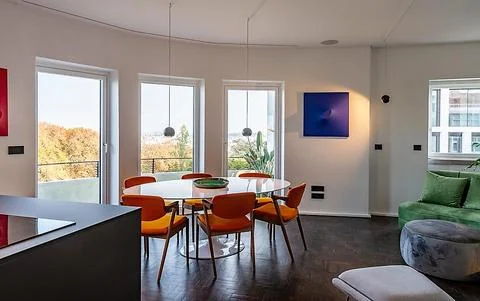
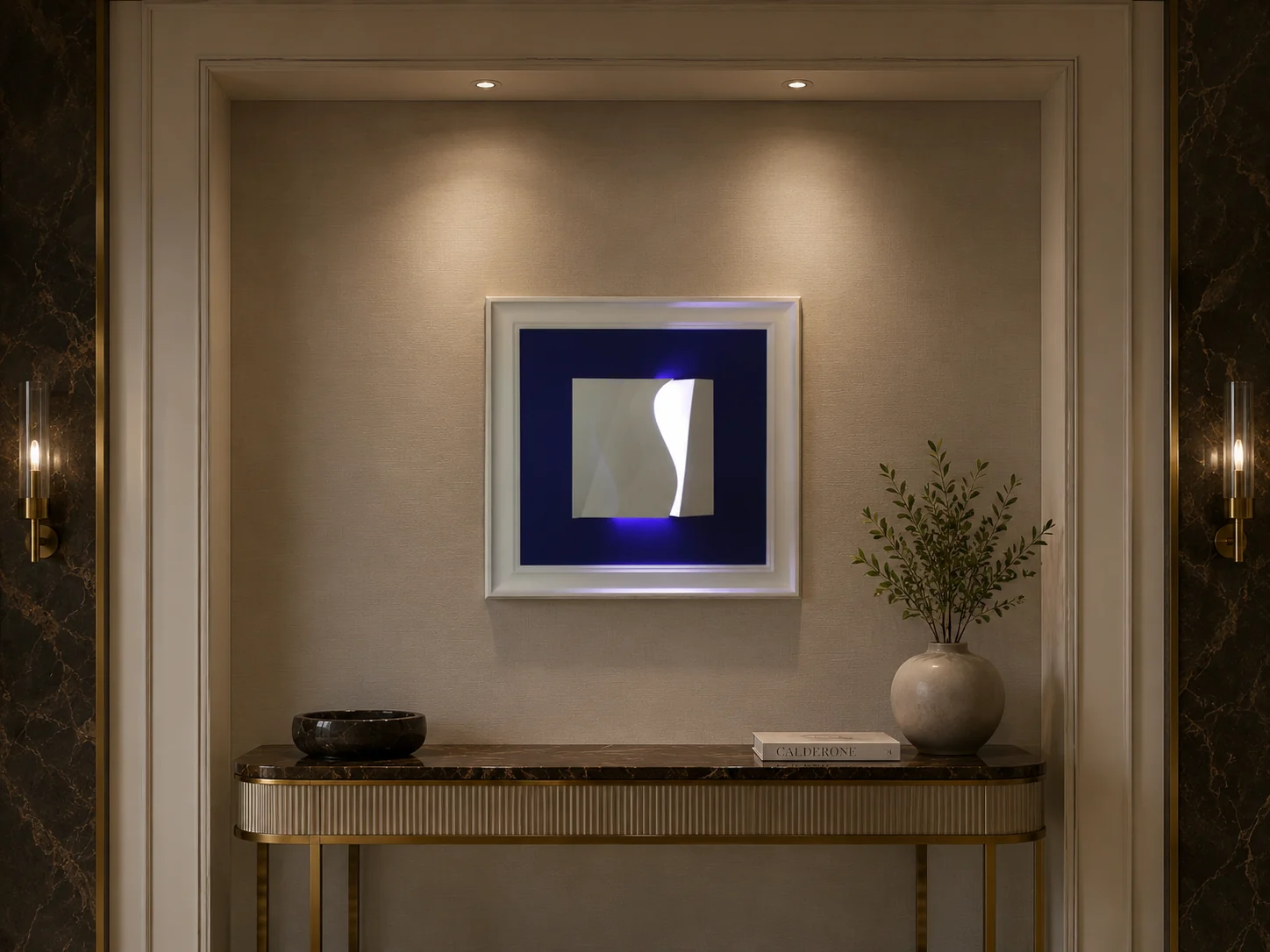
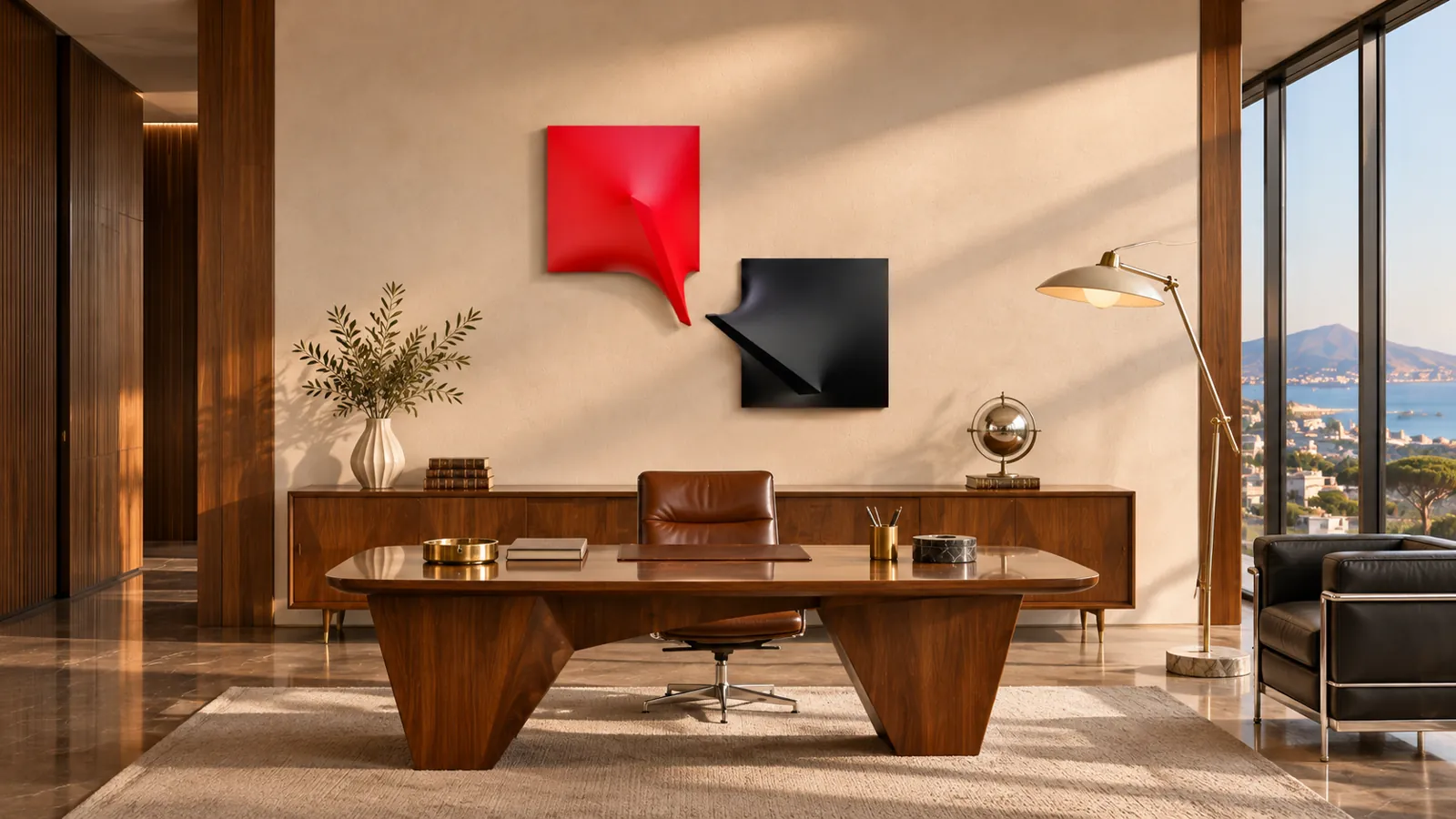
Alessandro Butera Studio, founded in 2014 and based in Trabia, near Palermo, works in the line of Italian Spatialism. The pieces are extroflessed and modular: each module can be moved to obtain different light effects and can be made in other colours. In the LED works light is not shone on the piece from outside but is part of it.
What it means for an architect or a collector
A modular piece can be adapted to the wall and re-composed later. Light decides how the relief is read, so the position of the work is considered together with the lighting plan. For the practical side, see the guides on lighting a wall sculpture and on art and architecture.
Frequently asked questions
Is a modular work fixed?
No. In the Studio's modular works each module can be repositioned to create different light effects.
Can the colours be changed?
Modules can be made in other colours, agreed with the architect or the collector.
Where does this research come from?
From Italian Spatialism, Fontana, and the extroflession of Castellani and Bonalumi, as told in this series.
Join the conversation.
Share a comment below for public discussion after review. For a private question or an idea for a future article, write directly to the Studio.
Ask the Studio privatelyExplore the history of contemporary art, Spatialism, Collections.
Discuss a commission