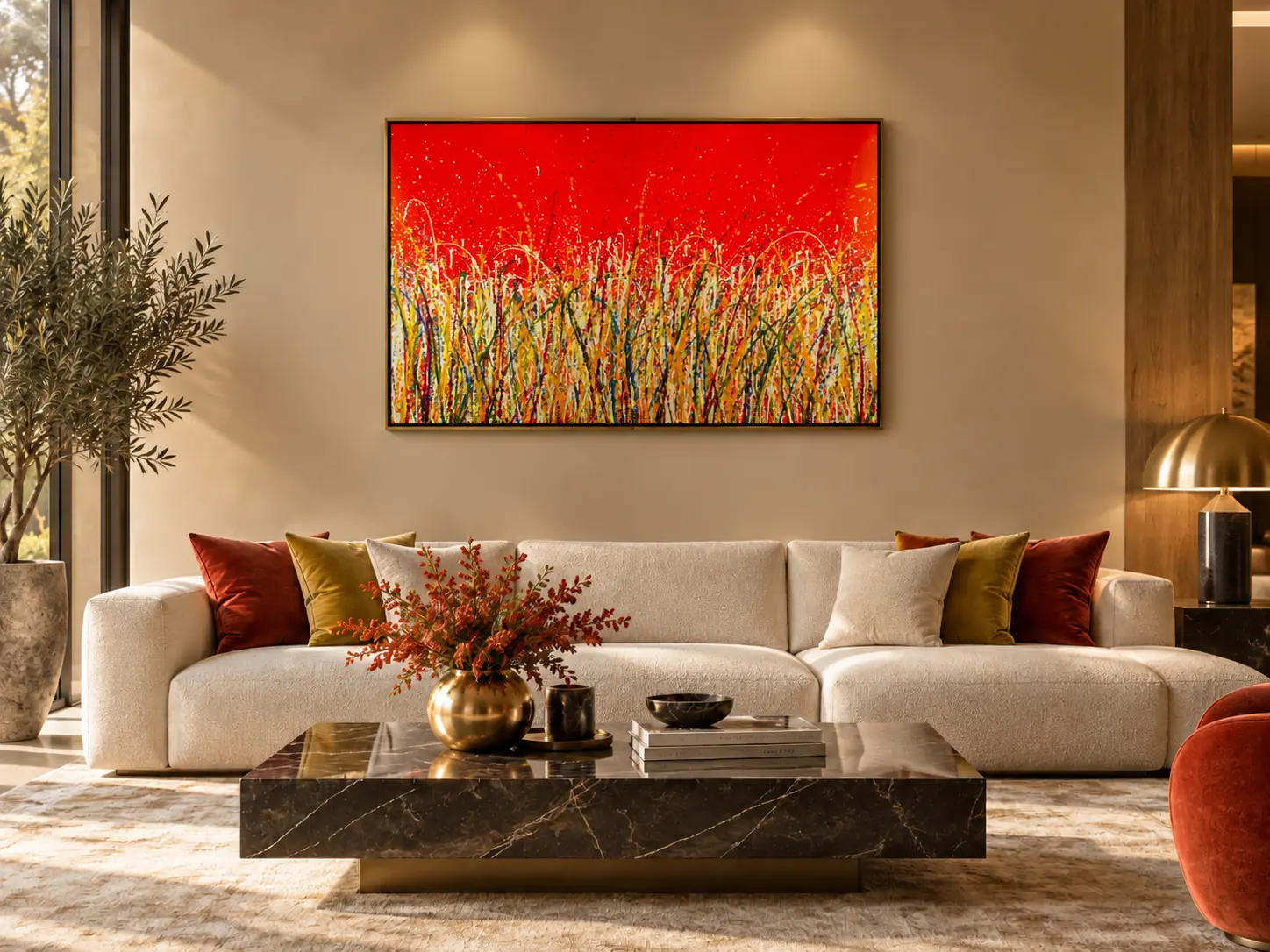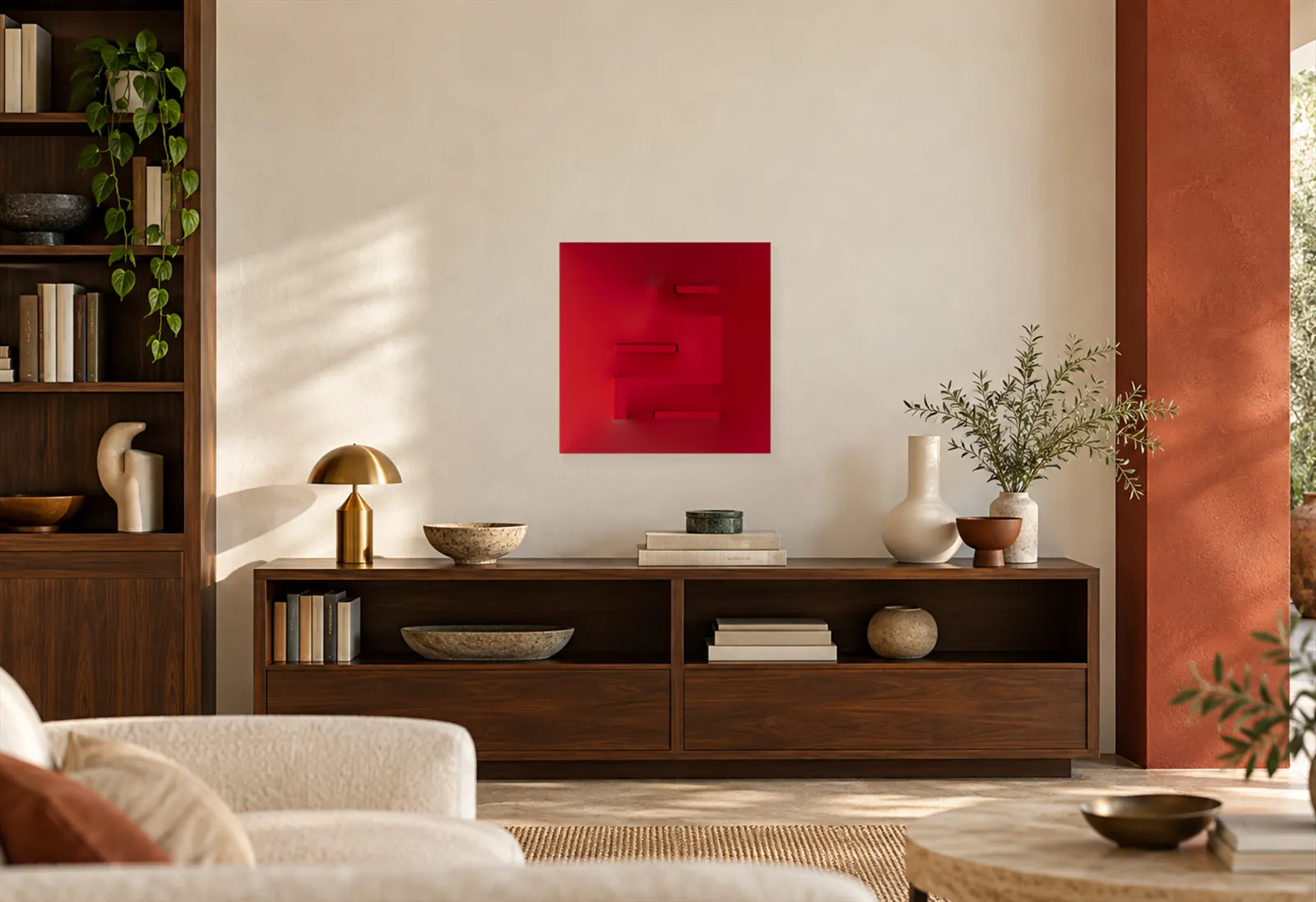
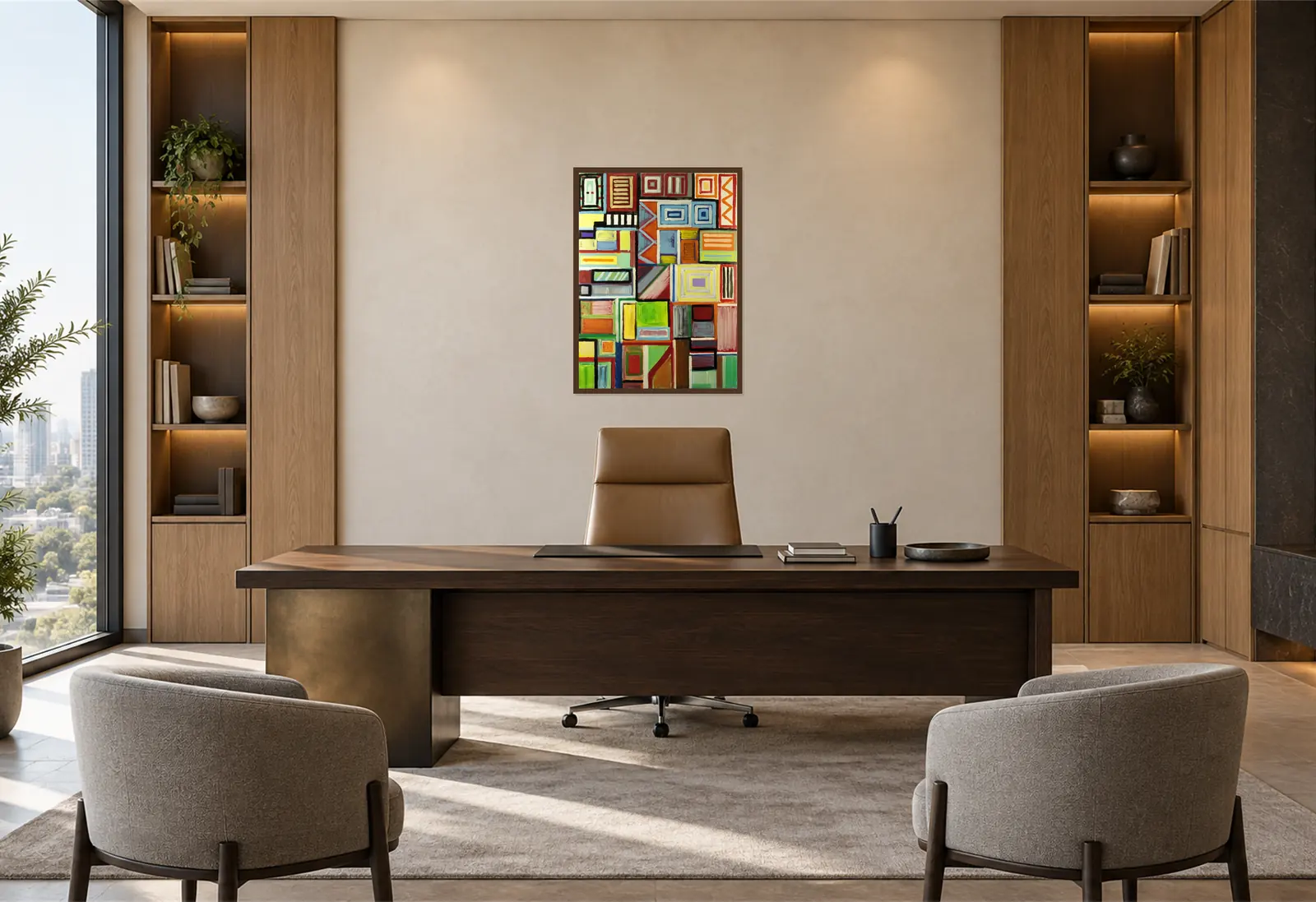
Different rooms ask different questions
Bauhaus, mid-century modern and Art Deco should not be collapsed into one retro style. Bauhaus brought art, craft, architecture and design into dialogue; Art Deco is associated with a different taste for decorative refinement and luxurious materials. Mid-century rooms often emphasize clear furniture profiles and warm timber. An original contemporary artwork can converse with each setting without pretending to be a period piece.
Geometry without imitation
In a room with ordered grids and functional furniture, a geometric painting can echo structural rhythm while introducing a more personal hand. If the room already has strong pattern, a monochrome wall sculpture can create a quieter counterpoint. In a mid-century setting, scale and the relationship to wood, upholstery and daylight often matter more than matching an exact colour.
A practical selection method
Photograph the wall in daylight and artificial light. Measure the available area and the principal viewing distance. Then compare a painting, a tactile relief and a three-dimensional sculpture at their real dimensions. Choose the work whose material presence strengthens the room rather than merely repeating its design vocabulary.
Frequently asked questions
Must art in a Bauhaus-inspired room be geometric?
No. Geometry can create dialogue with the architecture, but contrast in texture, colour or form can be just as effective.
Can an original artwork work with vintage furniture?
Yes. A contemporary painting or relief can connect with mid-century furniture through proportion, colour and placement without imitating its period.
Join the conversation.
Share a comment below for public discussion after review. For a private question or an idea for a future article, write directly to the Studio.
Ask the Studio privately