An interior that leaves room for a work
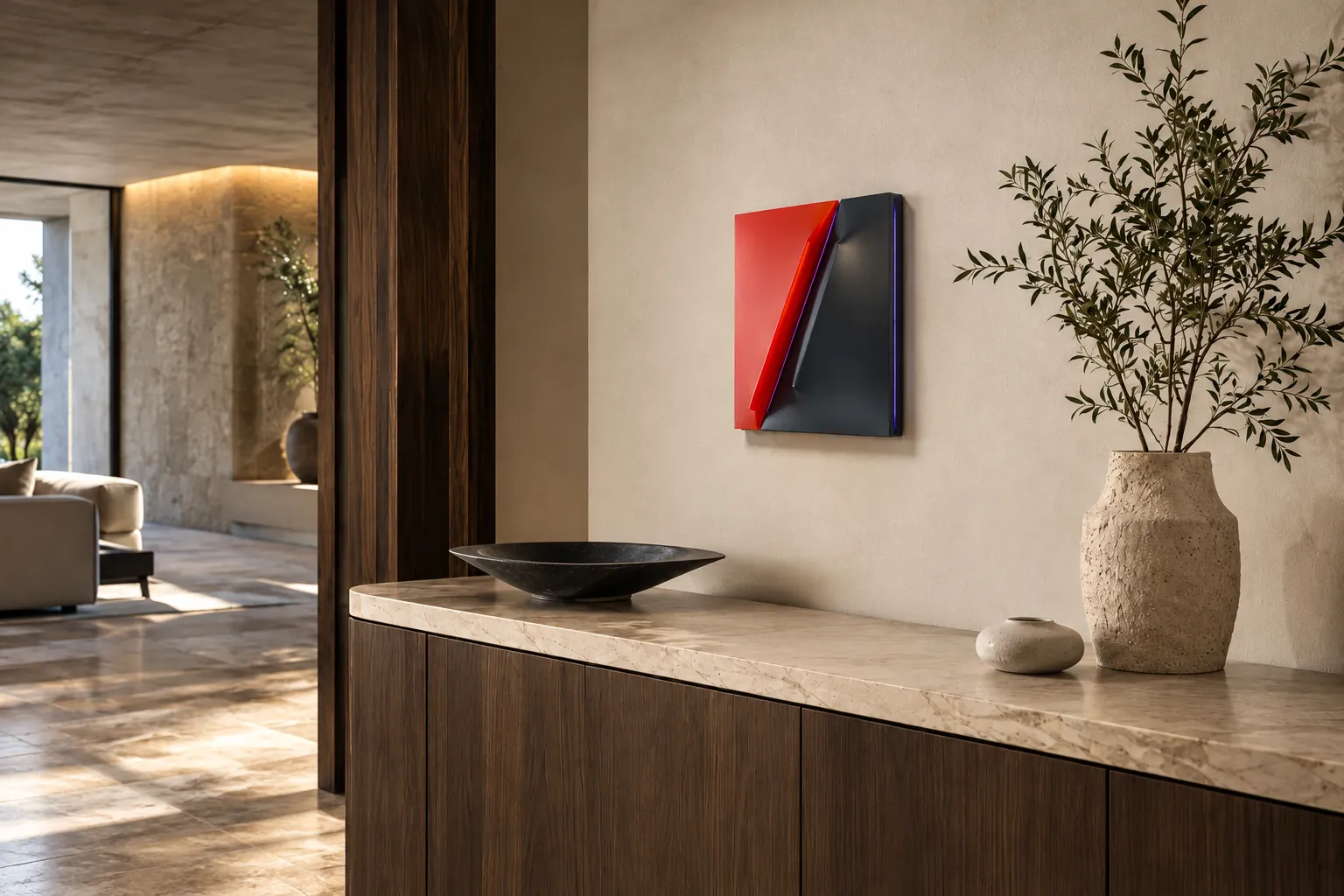
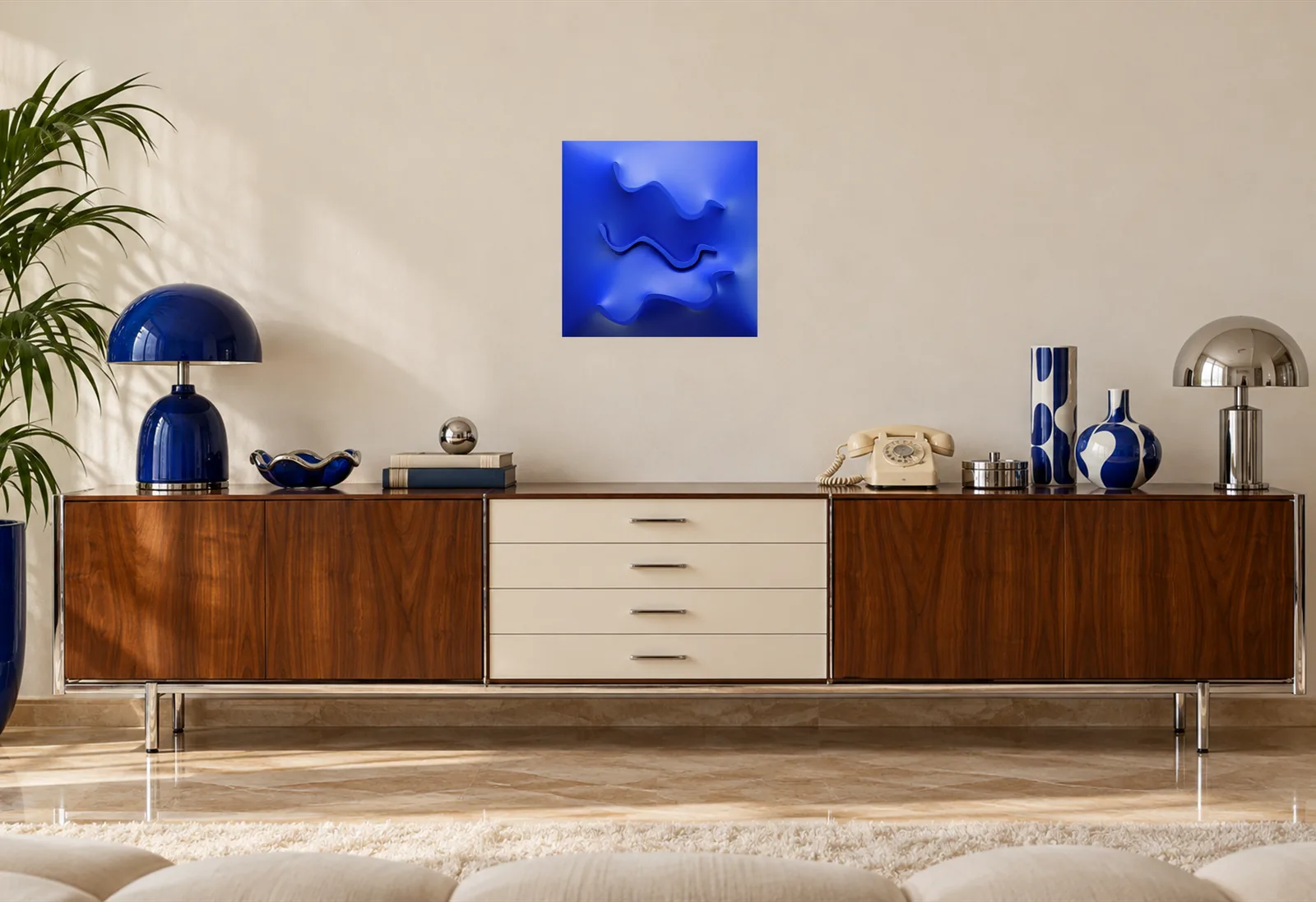
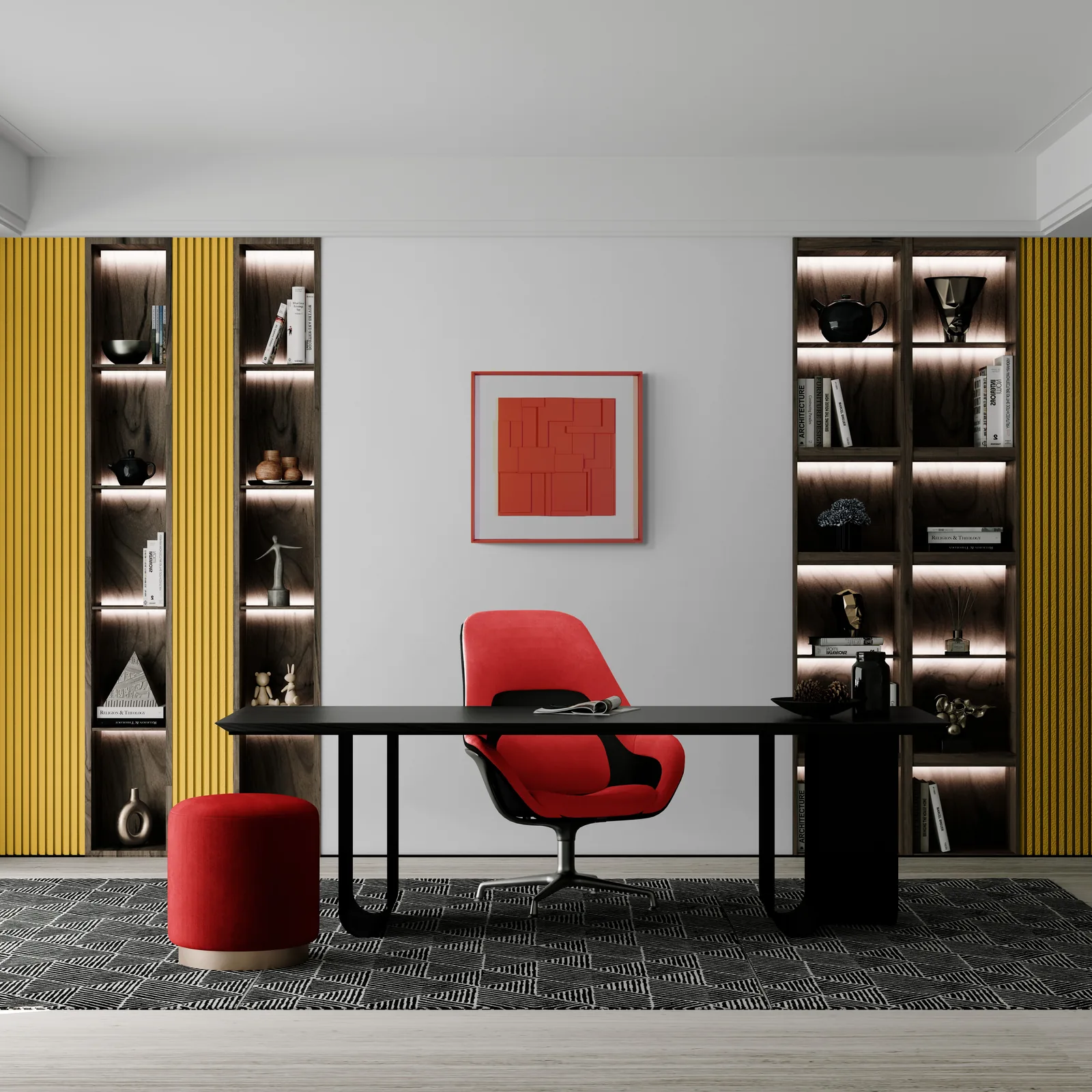
Quiet luxury is often described through muted colour and expensive materials, but restraint is more interesting when it has a focal point. A small contemporary bas-relief gives the eye somewhere to rest. Its form becomes legible through the light already present in the room, while the surrounding wall remains part of the composition.
This is why a sculptural work can be more effective than a larger decorative image. Depth changes with the visitor's position; the artwork has a second life in shadow.
Scale, surface and daylight
Start with the viewing distance, wall width and position of natural light. A compact work can carry a room if its silhouette is clear and the installation gives it breathing space. A hand-finished surface rewards close attention without asking the interior to become a gallery set.
A monochrome relief is not automatically a neutral choice. Blue, black or white changes its relationship with timber, stone and textiles. The right question is how that particular work behaves in that particular room.
Choosing an original
Ask for exact dimensions, material, mounting requirements and documentation of the work. For a commission, a discussion with the artist can define form, colour and placement before fabrication. A considered artwork remains identifiable as an original artistic proposition, even when it responds to an interior design brief.
Frequently asked questions
Is a bas-relief suitable for a minimalist living room?
Yes, when its scale, depth, surface and lighting are chosen in relation to the wall and the room's circulation.
Can a wall sculpture be commissioned in a particular colour?
The Studio can discuss a new work's colour and dimensions as part of a private commission; the final artistic design is agreed individually.
Join the conversation.
Share a comment below for public discussion after review. For a private question or an idea for a future article, write directly to the Studio.
Ask the Studio privately