Depth and one focal point
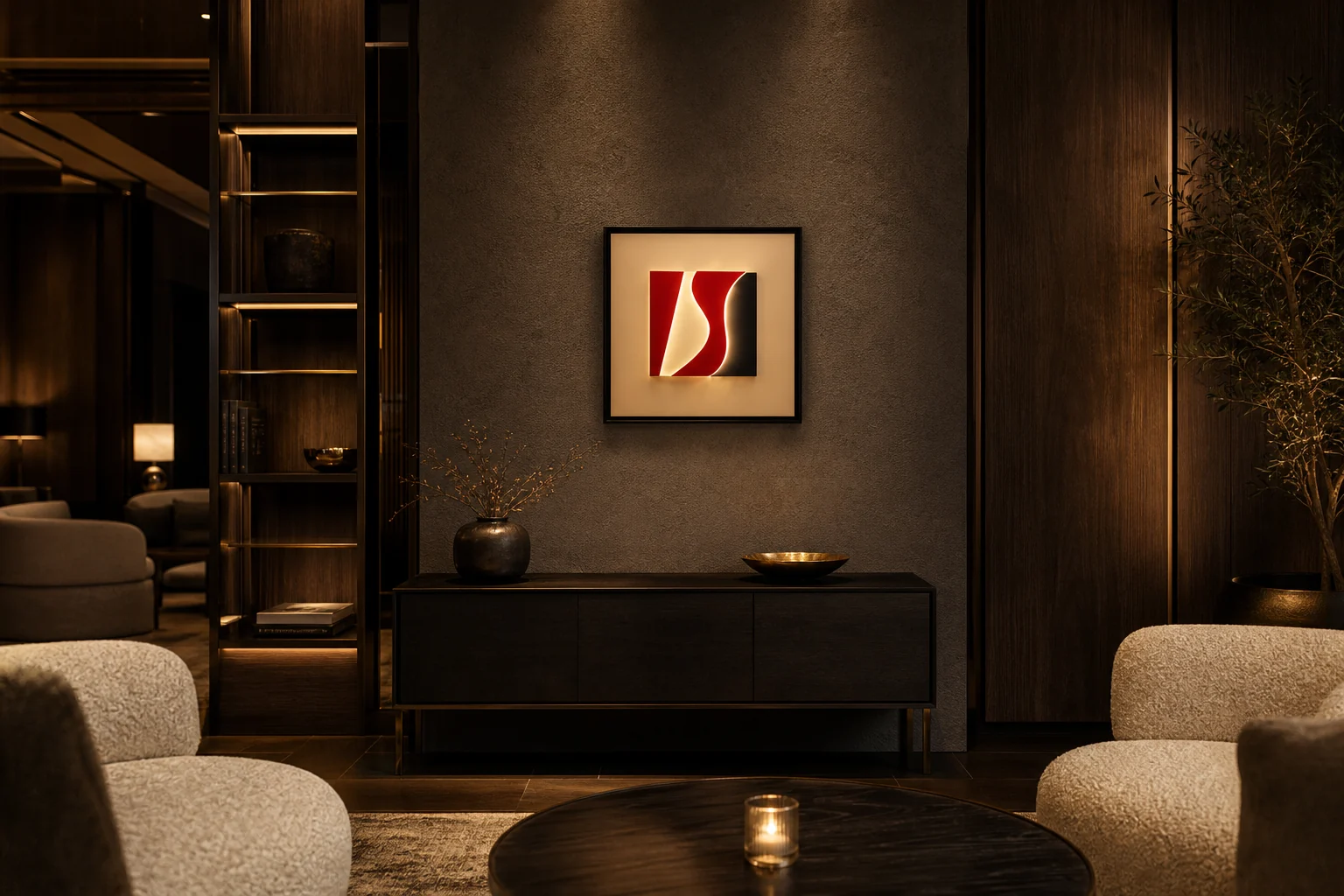
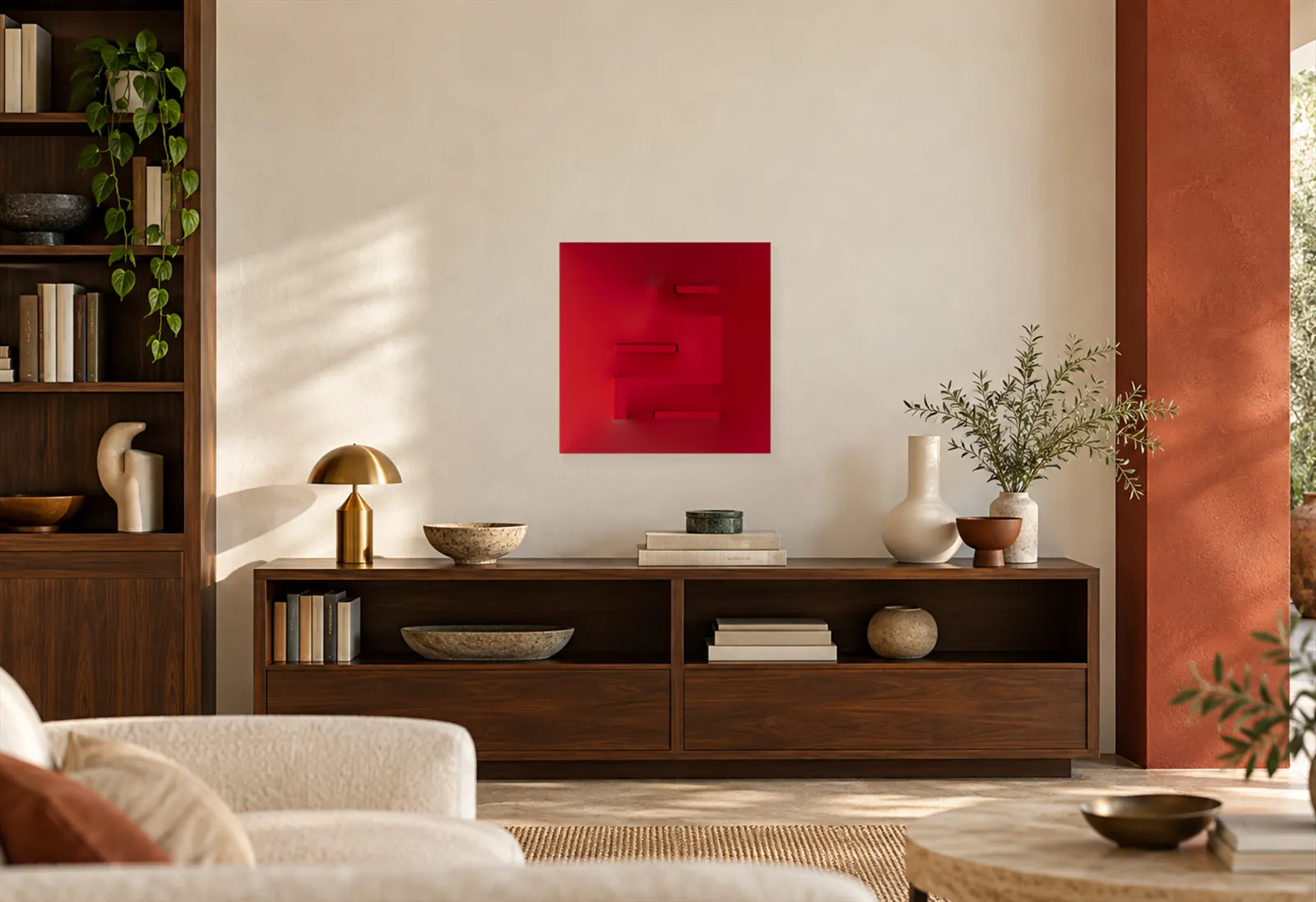
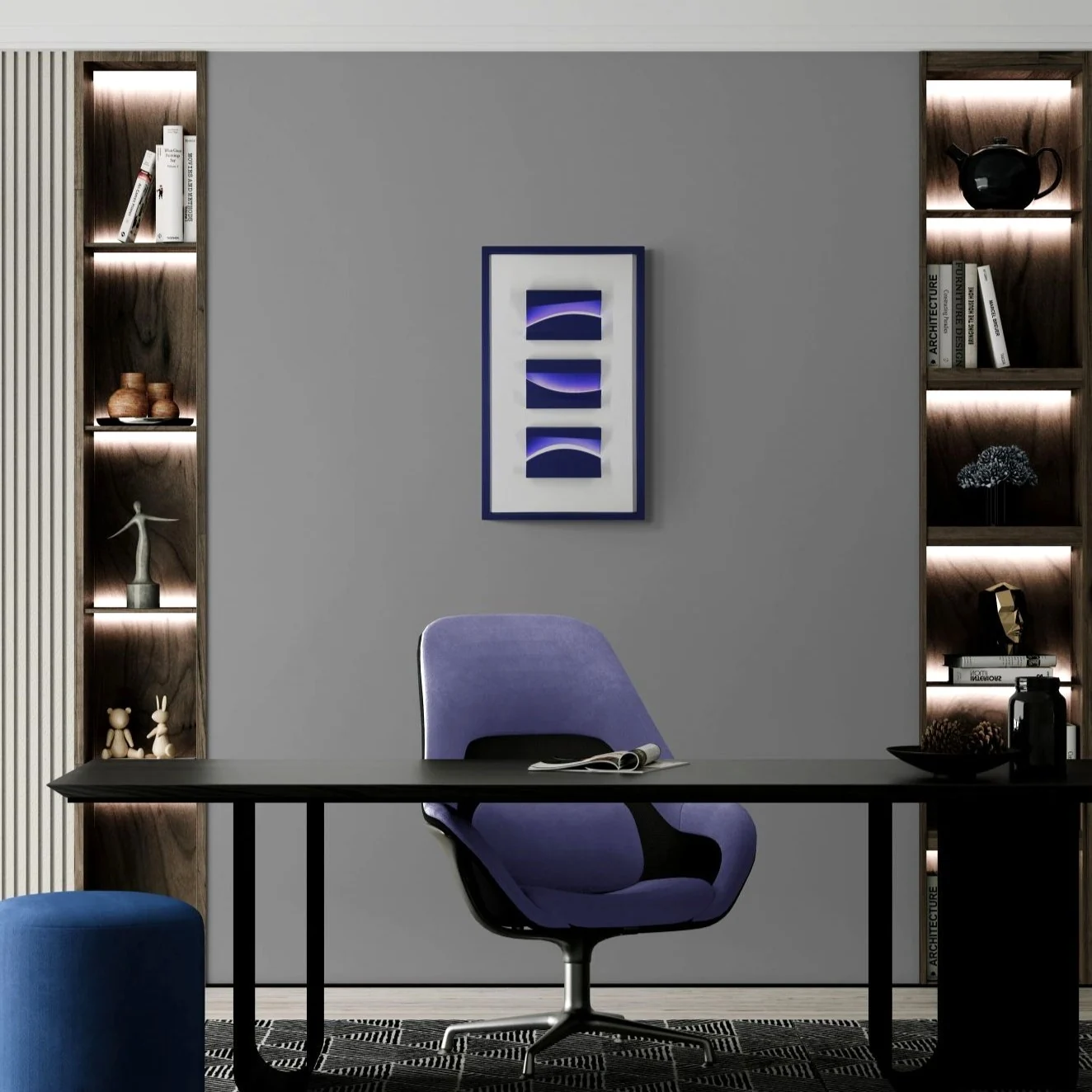
A sculptural work suits an executive office because it adds depth and a single focal point without adding objects to the room. A relief on the wall behind the desk or at the end of the boardroom is read at once, holds its place in changing light and needs no surface space.
Scale and position matter more than colour. Choose a size that relates to the wall and to the furniture in front of it, and place the work where it is seen from the door and from the seated position.
Behind the desk or facing the room
Behind the desk the work is seen by visitors and stays out of the occupant's sight. Facing the desk it becomes part of the daily view. In a boardroom the end wall is usually the strongest position. Decide with the person who uses the room.
Practical points
Check the wall structure and the fixing, the lighting and glare on screens, and the delivery route. Works with integrated LED need a power point behind the wall. The Studio coordinates fixing points, power and access with the project team. To start, send a photograph and the wall dimensions.
Frequently asked questions
Which wall suits an executive office?
Usually the wall behind the desk or the end wall of a meeting room, where the work is seen on entering.
Is a sculptural work distracting in a meeting room?
A restrained relief with a calm colour does not compete with the discussion; it gives the room a fixed point. Colour and size are chosen with the room in mind.
Does the artwork need special lighting?
Soft light from the side shows a relief best. Avoid direct light that reflects on screens. Some works include integrated LED.
Can the Studio make a work to measure?
Yes. The Studio considers commissions in which size, colour and modules are defined with the client.
Join the conversation.
Share a comment below for public discussion after review. For a private question or an idea for a future article, write directly to the Studio.
Ask the Studio privately